If you turned 50 recently, congrats. You’ve reached a milestone worth celebrating. However, once you’ve blown out the candles on your birthday cake, it’s time to face a harsh financial reality: retirement preparation has officially begun in the “Power Decade.”
Today, a common misconception about retirement planning persists. Macroeconomic data shows that median retirement balances have roughly tripled since 1989, so we pat ourselves on the back. “We’re richer than our parents were!” we cheer.
But not so fast.
Truth is, big retirement balances don’t guarantee 50-somethings are better prepared for life after work. Today, because of structural economic shifts, soaring healthcare costs, and eroding safety nets, pre-retirees need far more money than previous generations did to maintain the same standard of living.
In short, if you’re in your 50s, the clock is ticking. Rather than panicking, it’s time to strategize. Here’s how to build a bulletproof financial future by dominating your “Power Decade” and changing the retirement landscape.
Table of Contents
ToggleThe Shifting Retirement Landscape: Why the Rules Changed
Over the past thirty years, the economic foundation has shifted beneath our feet, so a larger account balance doesn’t necessarily mean a safer retirement. As such, you may be setting yourself up for a rude awakening if you plan for retirement based on your parents’ playbook.
Today’s retirement is being reshaped by four structural shifts:
- The waning of pensions. Do you remember the gold watch and the monthly pension check? They’re relics. In the private sector, defined-benefit pensions are almost nonexistent. Currently, only 32% of American workers have a traditional defined-benefit pension. It’s now entirely up to you to fund your retirement through your 401(k) or IRA. If you don’t fund it, nobody will.
- Longer lifespans. Our lives are longer and healthier than ever before. While that’s great news for your retirement bucket list, it’s a huge challenge for your portfolio. As your retirement horizon extends, your accumulated savings must span 20, 30, or even 40 years.
- Surging essential costs. Although general inflation gets the headlines, healthcare costs and housing costs have been rising at rates that dwarf historical inflation and wage increases for retirees.
- The sandwich generation trap. 50-somethings are squeezed from both sides today. They are often responsible for financially supporting adult children who are struggling in a high-cost economy, while simultaneously managing (and funding) costly elder care for aging parents.
A Stark Divide: The Reality of Modern Savings
Taking a closer look at the numbers reveals a worrying picture. America’s retirement crisis isn’t just about saving too little; it’s a deep, structural divide between those with assets and those without.
The unsaved substantial minority.
About 3 out of 10 households in their 50s have no retirement savings or pensions, according to Federal Reserve data. After retiring from the workforce, these individuals will depend entirely on Social Security, which was designed as a safety net, not a primary income source.
The median reality check.
Even for those with dedicated retirement accounts, the numbers are sobering. In the critical 55-to-64 age bracket, the median retirement account balance sits around $185,000.
$185,000 seems like a lot at first glance. However, let’s apply a conservative safe-withdrawal rate (like 4%) to that balance:
Annual Income = $185,000 x 0.04 = $7,400
With an even more generous withdrawal rate of 5%, annual income would still be only $9,250. When you factor in the rising costs of utilities, food, and basic medical care, that falls dramatically short of what most financial experts recommend for a comfortable lifestyle.
The “Power Decade” Playbook: How to Build Your Fund Starting Now
If your 50s balance looks more like the median than your dream goal, don’t worry. Often, your 50s are your peak earning years. There’s a good chance your kids are grown up, your mortgage is getting paid off, and your disposable income is at an all-time high.
In short, you have a window here. Over the next 10 years, here’s how you can supercharge your momentum.
1. Leverage catch-up contributions.
Utilizing the IRS “catch-up” rules is the fastest way to increase your savings. The government knows you need a boost, so it lets you contribute significantly more to tax-advantaged accounts once you turn 50.
| Account Type | Age Group | 2026 Base Limit | 2026 Catch-Up Limit | Total Allowable Contribution |
| 401(k) / 403(b) | Ages 50–59 | $24,500 | $8,000 | $32,500 |
| 401(k) / 403(b) | Ages 60–63 | $24,500 | $11,250 | $35,750 |
| Traditional / Roth IRA | Ages 50+ | $7,500 | $1,100 | $8,600 |
Redirecting a few thousand dollars a year into these tax-sheltered environments can completely change your retirement trajectory over the next decade.
2. Consider a Roth conversion.
Most workers save most of their money in tax-deferred accounts like 401(k)s. While this saves you money on taxes today, it creates a massive tax bill in retirement.
If you transfer traditional assets to a Roth account (and pay the tax on the converted amount now), you can lock in current tax rates. Later in life, when tax rates might be significantly higher, you receive highly valuable, tax-free income streams.
3. Wipe out the bad debt.
In the end, high-interest debt kills wealth. Carrying credit card or personal loan balances into your 50s is like running a marathon with lead weights attached.
Take advantage of your peak earning years to execute a debt-snowball or debt-avalanche strategy. Before you officially retire, make it your absolute mission to be completely debt-free — including your consumer debt and mortgage, if possible.
4. Harness the power of an HSA.
If you have a high-deductible health plan (HDHP), you can set up a stealth retirement account: a Health Savings Account (HSA).
An HSA offers a triple tax advantage that cannot be matched:
- Contributions are 100% tax-deductible.
- The money grows tax-free.
- Withdrawals are tax-free when used for qualifying medical expenses.
Even better? When you reach 65, the penalty for withdrawals for non-medical reasons disappears. You can then withdraw non-medical funds tax-free from your HSA as you would from a traditional IRA (where non-medical withdrawals are simply treated as regular income).
5. Reassess your asset allocation.
If you are in your 20s or 30s, you can afford to ride the wild waves of the stock market. As you enter your 50s, though, you need growth to keep up with inflation, but you cannot afford to have your nest egg wiped out right before retirement.
With the help of a professional, gradually transition your portfolio to a mix of stocks, bonds, and fixed-income assets that allow you to invest and grow your money.
6. Master your Social Security strategy.
As you aggressively boost your personal savings during this power decade, you should also guard your future income streams. To safeguard your financial floor, your Social Security claiming strategy is one of the most powerful, guaranteed levers you have.
When you time-set your claim, you decide how much cash you’ll have every month for the rest of your life:
- Claiming at age 62 (Early Retirement). This permanently reduces your monthly paycheck. By claiming early, you accept a lifetime reduction of up to 30%.
- Claiming at age 67 (Full Retirement Age). If you were born in 1960 or later, 67 is your magic number. At this point, you have earned exactly 100% of your benefit.
- Claiming at age 70 (Delayed Retirement). In my opinion, this is the ultimate power move. As you delay claiming past your full retirement age up to age 70, your monthly benefit check increases by 8%.
If you delay your claim, you will get a tax-free, inflation-adjusted, government-backed return. With just a couple of extra years’ wait, you can guarantee your future self a raise, which is much more secure than a volatile stock market investment.
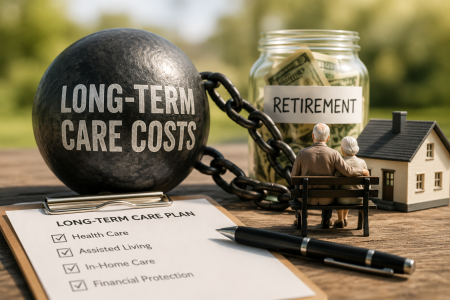
7. Plan for the elephant in the room: Long-term care.
You can’t talk about retirement in your 50s without mentioning healthcare. After all, 70% of people over 65 will need some form of long-term care during their lifetimes. But here’s the kicker: Medicare does not cover long-term nursing home care or assisted living.
When you’re in your 50s, you have the opportunity to evaluate your healthcare options to protect your hard-earned nest egg:
- Hybrid long-term care policies. These policies combine life insurance with long-term care benefits. The policy pays out if you need medical care. If you don’t, your beneficiaries receive a death benefit.
- Home equity options. HECMs or reverse mortgages allow seniors over 62 to access their home equity for late-life care expenses without having to move.
8. Don’t retire too soon.
Last but not least, don’t rush to the finish line. You can completely transform your financial outlook by working an extra few years if your retirement savings aren’t where they should be.
An NBER study found that a 66-year-old worker can increase their retirement income by nearly 8% by working one additional year and delaying Social Security claims by one year.
However, if full-time work is too tedious, look for a middle ground. By switching to consulting or taking on a part-time position, you can keep your mind sharp, keep socially connected, and most importantly, prevent dipping into your retirement portfolio too soon.
The Bottom Line
Your 50s are not a time to panic. But they are a time to get incredibly serious. The key to building a successful retirement today is to take a holistic approach. Beyond saving money, plan for taxes, healthcare, debt reduction, and lifestyle changes.
This decade can be your most powerful, transformative financial chapter ever if you take control of your financial narrative now. So, prepare diligently, execute consistently, and build a successful retirement.
Image Credit: Nataliya Vaitkevich; Pexels