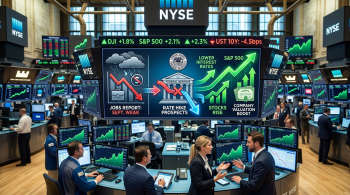
Stocks can rise after disappointing economic news, even when that reaction seems backward. I saw this pattern after a weak September jobs report reduced expectations for another Federal Reserve rate increase. The market was not celebrating weaker hiring. Investors were responding to the possibility of lower interest rates and less pressure on company values.
Table of Contents
ToggleThe Jobs Report Changed Rate Expectations
September hiring came in at roughly one-third of what analysts had expected. That large shortfall suggested the labor market was losing momentum.
The prior month also looked less impressive after a revision. August had first appeared to deliver a strong increase in jobs. Updated figures lowered that result, weakening the recent employment picture.
Annual wage growth added another important signal. It fell to its slowest pace since 2021. Slower wage gains can ease inflation concerns because labor costs affect prices across much of the economy.
Together, these figures changed the market’s view of Federal Reserve policy. The estimated odds of an October rate increase fell below 20 percent. Stocks climbed as investors adjusted to that lower probability.
“Welcome to the bad news is good news environment.”
That phrase captures the short-term market logic. Weak employment data are bad for workers and economic growth. Yet the same information can be favorable for asset prices if it reduces the chance of tighter monetary policy.
View this post on Instagram
How Bad News Becomes Good News for Markets
Financial markets are forward-looking. Prices often move based on changes in expectations, rather than the current condition of the economy.
A jobs report can disappoint economists while still helping stocks. The key question is whether the report changes the expected path of interest rates.
- Weak hiring may indicate that economic demand is cooling.
- Slower wage growth may reduce future inflation pressure.
- Lower inflation pressure may give the Federal Reserve less reason to raise rates.
- Lower expected rates can support stock and bond prices.
Investors had been watching for signs that the labor market was too strong. Rapid hiring and wage growth can keep consumer demand high. They can also make inflation harder to control.
If inflation remains elevated, the Federal Reserve may raise its benchmark rate or keep rates high for longer. A weak jobs report can reduce that risk, at least for a time.
This does not mean investors want widespread layoffs or a recession. It means markets sometimes prefer moderate cooling over continued economic strength that might lead to more rate increases.
Why Interest Rates Matter to Stock Prices
Interest rates influence borrowing costs throughout the economy. Higher rates can make mortgages, credit cards, business loans, and corporate debt more expensive.
Companies may respond by delaying new projects, slowing hiring, or reducing spending. Consumers may also cut purchases when monthly debt payments rise.
Rates affect how investors value future company profits. A stock represents a claim on earnings that may arrive over many years. Analysts estimate what those future dollars are worth now.
Higher interest rates reduce the present value of future profits. Lower expected rates can increase that value. This is one reason growth stocks may react sharply to changes in Federal Reserve expectations.
Bond yields also influence competition for investment dollars. As yields rise, bonds may become more attractive compared with stocks. If yields fall, some investors may accept more stock market risk while seeking higher returns.
The market rally after the jobs report reflected several of these forces at once. Traders saw weaker employment, slower wage growth, and lower odds of an October rate increase. They quickly adjusted stock prices to match that outlook.
Revisions Can Matter as Much as Headlines
The first number in an economic report attracts the most attention. Yet prior-month revisions can tell an equally important story.
Initial employment estimates rely on surveys and incomplete information. Government agencies update those estimates as more data arrive. A strong report can later look weaker, while a poor result can improve.
August initially appeared to be a blowout month for hiring. Its downward revision challenged that impression. Investors were no longer looking at one isolated September disappointment. They were seeing signs of softer labor conditions across more than one month.
I believe this is why investors should examine the full report instead of reacting to a headline. The main figure, previous revisions, wages, unemployment, and labor participation can point in different directions.
A single data release rarely settles the economic debate. It can, however, cause a large market move if the result differs sharply from forecasts.
Wage Growth and the Inflation Debate
Wages are closely watched because labor is a major cost for many businesses. Strong pay growth helps households, but it may also encourage companies to raise prices when productivity does not keep pace.
The weakest annual wage growth since 2021 suggested that one source of inflation pressure could be easing. That development supported the case for the Federal Reserve to pause.
Slower wage growth is not automatically positive. Workers may lose purchasing power if their pay increases remain below inflation. Household spending may also weaken if income growth slows too much.
The ideal outcome for policymakers is often a gradual cooling. They want inflation to ease without causing a severe rise in unemployment. Markets sometimes call this a soft landing.
That balance is difficult to achieve. Monetary policy works with delays, and the full effect of earlier rate increases may take months to appear.
What Investors Should Learn From the Rally
The market’s response offers several useful lessons. Most concern expectations, context, and disciplined decision-making.
- Markets react to surprises, not simply whether a number is good or bad.
- Economic weakness can lift stocks if it lowers expected interest rates.
- Revisions deserve attention because they can change the broader trend.
- One report should not determine a long-term investment plan.
- Sharp daily moves do not guarantee that the same trend will continue.
Investors should also separate market reactions from economic outcomes. A rally does not prove that weak hiring is healthy. It only shows how traders interpreted the report’s likely effect on monetary policy and valuations.
Short-term price moves can reverse after another inflation report, a Federal Reserve speech, or new employment data. Rate probabilities are estimates, not promises.
As CEO of LifeGoal Wealth Advisors, a Certified Investment Management Analyst, and a Certified Financial Planner, I favor decisions tied to financial goals rather than one morning’s market reaction. Diversification, suitable risk, and an appropriate time horizon remain more dependable than guessing the next policy move.
The Limits of the Bad-News Rally
A bad-news rally can persist while investors believe weaker growth will control inflation without causing a deep downturn. The market response may change if economic weakness grows too severe.
At first, softer hiring can reduce rate fears. Later, a rapid employment decline could create concerns about falling profits, weaker consumer spending, and recession.
This creates a narrow range that markets may favor. Investors often want enough cooling to discourage rate increases, but not enough to damage company earnings.
The Federal Reserve must weigh similar risks. Raising rates too much could weaken the economy more than intended. Stopping too soon could allow inflation to remain high.
Investors should therefore avoid treating “bad news is good news” as a permanent rule. It describes a specific market setting. The same jobs result can produce a different reaction under different inflation, growth, and policy conditions.
The September report showed how quickly expectations can move. Hiring fell far short of forecasts, August was revised lower, and wage growth slowed. The estimated chance of an October rate increase then dropped below 20 percent, helping stocks rise.
My central takeaway is simple: markets price the future, not just the present. Weak economic news may support stocks when it reduces rate pressure. Still, investors should look past one trading session and keep long-term plans tied to their needs.
Frequently Asked Questions
Q: Why would stocks rise after a weak employment report?
Weak hiring can reduce expectations for further interest rate increases. Lower expected rates may support company valuations and make stocks more appealing relative to bonds.
Q: Does a market rally mean weak job growth is good for the economy?
No. Market prices and economic well-being are different measures. Investors may welcome reduced rate pressure even though slower hiring can create real risks for workers and consumer spending.
Q: Should investors change their portfolios after one jobs report?
Usually, one report should not drive a major portfolio change. Employment figures are revised, and policy expectations can shift quickly. Decisions should reflect goals, risk tolerance, and investment time frame.
Image Credit: