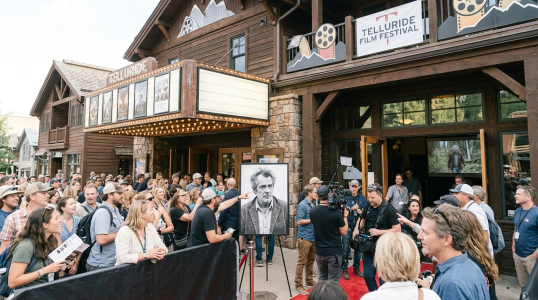
A documentary built from three years of access to the elusive Holmes premiered at the Telluride Film Festival without advance fanfare, offering rare footage of its closely watched subject.
The surprise screening turned a familiar festival tactic into the film’s first statement. Instead of a long promotional campaign, the filmmakers let the footage lead. The approach also raised immediate questions about access, editorial independence, and what Holmes chose to reveal.
Table of Contents
ToggleThree Years Behind the Public Image
The documentary’s chief asset is time. Three years of filming can show changes that a single interview may miss, including shifts in mood, relationships, routine, and public presentation.
“A surprise documentary premiered at Telluride, featuring three years of access to the enigmatic Holmes.”
That description suggests an observational film rather than a quick profile. Long-term access can capture quiet moments before and after major events. It may also expose gaps between a subject’s public image and private conduct.
Yet access does not guarantee candor. A subject who knows cameras are present can shape scenes, restrict locations, or avoid sensitive topics. Editing adds another layer of control. Three years of material may be reduced to less than two hours.
Why a Telluride Premiere Matters
Telluride has built much of its reputation on discovery. Its schedule is traditionally revealed close to opening, limiting months of speculation and giving screenings a sense of immediacy.
A surprise premiere can help a documentary in several ways:
- It allows the film to reach viewers before a fixed public narrative forms.
- It creates strong word of mouth among critics and industry guests.
- It gives filmmakers a chance to test how audiences read difficult scenes.
- It can begin an awards campaign without an expensive early publicity push.
The strategy comes with risks. A sudden debut leaves little time for viewers to review source material or compare the film’s claims with prior reporting. That matters most when the subject is guarded or controversial.
Access Brings Ethical Questions
Close-access documentaries often sit between journalism and portraiture. Filmmakers need trust to remain near their subject, but they also need enough distance to challenge that person’s account.
The key test will be whether the documentary examines Holmes rather than merely observing Holmes. Viewers should watch for independent voices, clear timelines, supporting records, and moments when the film questions what appears on camera.
Context will also shape the final judgment. Footage may feel intimate while still leaving major issues unresolved. A revealing conversation can carry emotional weight, but it does not always settle disputed facts.
What Comes After the Premiere
The Telluride screening begins, rather than ends, the film’s public review. Attention will now turn to its distribution plans, wider festival appearances, and whether the filmmakers discuss the terms of their access.
Critical response will likely focus on three points: what the cameras captured, what Holmes withheld, and how the editors handled that divide. Those choices will decide whether the film works as an investigation, character study, or carefully managed self-portrait.
For now, the most significant fact is the length of access. Three years can produce an unusually detailed record. It can also produce a mountain of footage, with every omission carrying weight. At Telluride, the documentary opened that record to public scrutiny. The next question is whether it truly explains Holmes, or simply brings the mystery closer.
Image: Pexels