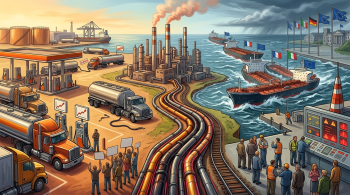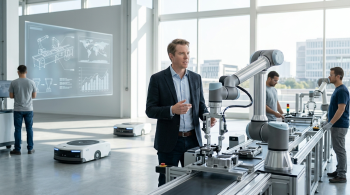
RJ Scaringe says preserving American manufacturing will require three tools working together: robots, tariffs, and diplomacy.
The Rivian founder and chief executive presents factory policy as more than a choice between free trade and protectionism. His position suggests that technology, trade rules and international relationships must support the same goal.
That argument carries weight as U.S. manufacturers face high labor costs, global competition, and pressure to secure critical supply chains. Electric vehicle makers face these strains even more acutely. They must manage expensive factories while sourcing batteries, minerals, and electronic parts from several countries.
Table of Contents
ToggleAutomation as an Answer to High Costs
Robots can help U.S. factories produce more goods with fewer repetitive tasks. They can also improve precision and keep production running longer.
For electric vehicle companies, automation may reduce the cost of assembling battery packs, vehicle bodies, and complex electronics. Greater output per worker can make domestic plants more competitive against factories in lower-cost markets.
Yet automation creates a political problem. A manufacturing base is often defended as a source of middle-class employment, while robots can reduce demand for some factory roles.
The outcome depends on how companies use the technology. Automation may remove certain jobs, but it can also create work in maintenance, software, engineering and quality control. Those positions often require more training.
Scaringe’s formula therefore implies a need for workforce policy alongside industrial policy. Factories cannot simply install robots and hope skilled workers appear beside them, wrench in hand.
Tariffs Offer Protection With Trade-Offs
Tariffs can raise the price of imported vehicles or parts. That protection gives domestic plants more room to compete against overseas producers with lower costs or government support.
Supporters argue that tariffs can prevent strategic industries from moving abroad. They may also encourage companies to build factories inside the United States to avoid import duties.
Critics point to the bill. Import taxes can increase costs for manufacturers that depend on foreign parts, and companies may pass those expenses to buyers. Trading partners can also respond with their own tariffs.
For electric vehicles, the calculation is especially difficult. A policy that shields American assembly plants could still make batteries or raw materials more expensive. Protection at the factory gate does little good if essential supplies become unaffordable.
Diplomacy Connects the Pieces
Scaringe’s inclusion of diplomacy recognizes that no modern vehicle is purely national. Battery minerals, semiconductors, and manufacturing equipment travel through international supply chains.
The United States may seek more domestic production, but it still needs dependable relationships with allied suppliers. Diplomatic agreements can secure access to materials while setting shared rules for subsidies, labor and environmental standards.
That approach could also limit tariff-driven retaliation. Governments can coordinate trade restrictions, negotiate exemptions, and decide which products deserve special treatment.
The three-part strategy can be summarized simply:
- Robots can reduce costs and improve factory output.
- Tariffs can protect domestic producers from heavily supported imports.
- Diplomacy can preserve access to vital materials and friendly markets.
A Difficult Balance for Industry
Scaringe’s view rejects easy answers. Robots alone cannot fix supply risks. Tariffs alone may raise prices. Diplomacy alone cannot erase major cost differences between countries.
The test will be whether policymakers can coordinate these tools without harming consumers or provoking costly trade disputes. Companies must also show that public support produces durable factories, useful skills and competitive products.
For Rivian and other American manufacturers, success will depend on execution. The next phase of industrial policy will be measured not by speeches or tariff schedules, but by affordable products leaving productive U.S. plants.
Image Credit: Pexels