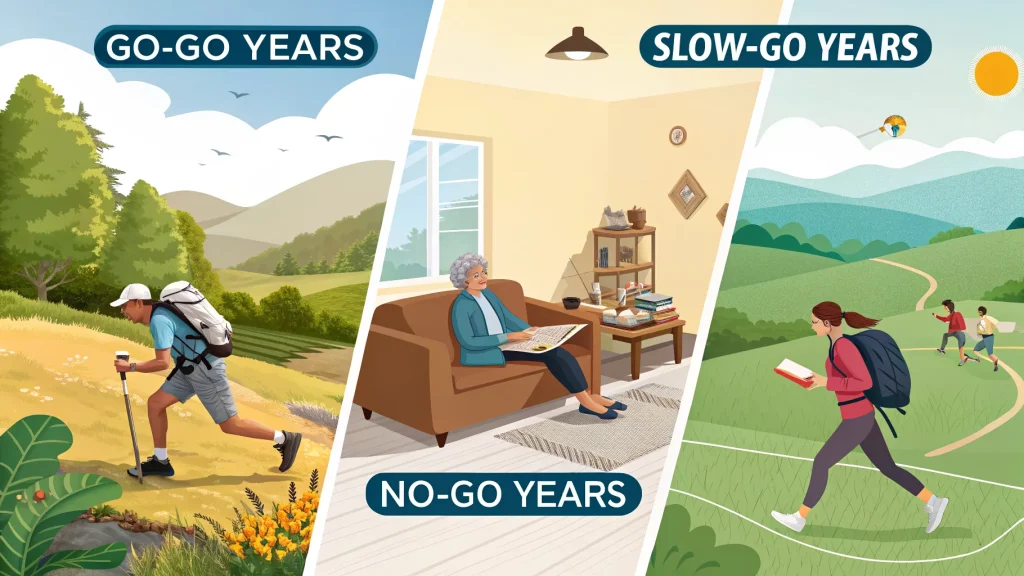
Retirement is not one long, steady chapter. It changes. Your health, energy, and interests shift over time, and your money has to match those shifts. I focus on a simple way to plan: the three phases of retirement spending. The go-go years. The slow-go years. The no-go years. Each phase asks for a different spending plan, a different safety net, and a different mindset.
“Retirement comes in three phases, and your spending needs to be planned accordingly: the go-go years, the slow-go years, and the no-go years.”
Table of Contents
ToggleThe Three Phases of Retirement
In your sixties, most people enter the go-go years. Energy is high. Trips, hobbies, and family time often peak. Travel is easier. Golf rounds are frequent. Grandchildren visits become a regular joy. This is when dollars can create the most life satisfaction because you finally have time and health to enjoy them.
In your seventies, many see the slow-go years. You still do what you love, but it often takes extra planning. Recovery time is longer. You might travel less far and less often. You may need a bit more help at home or on the road. Spending changes shape: fewer big adventures, more comfort and convenience.
After age 80, many people face the no-go years. Life is still meaningful. But health, mobility, and energy often set limits. Care and support move to the front of the plan. The focus turns to safety, dignity, and protecting your family from tough decisions under stress.
“The goal is not to die with the perfect portfolio. The goal is to use your money to live your most fulfilling life.”
View this post on Instagram
Why Spending Should Change Over Time
A single, flat spending number for three decades is rarely right. Needs and wants are not steady. The timing of joy is not even either. Your plan should reflect that.
In the go-go years, spending more on experiences can deliver the best return in happiness. In the slow-go years, health and home-based comfort often need a larger share. In the no-go years, care and protection dominate the budget. Matching money to the moment reduces stress and regret. It also reduces the risk of cutting spending later because early years burned too much cash—or the opposite, hoarding too long and missing life.
A Practical Framework I Use With Clients
I work with families as the CEO of LifeGoal Wealth Advisors. I hold the CIMA and CFP designations, and my advice is shaped by evidence and real life. Here is a simple way to build a phase-based plan that many people find useful.
- Set three budgets: a go-go budget, a slow-go budget, and a no-go budget.
- Map cash flows: Social Security, pensions, and portfolio withdrawals should change by phase.
- Align investments: safer money for near-term spending; growth money for later years.
- Prepare for care: price insurance and care options early, long before you need them.
- Protect the family: simplify accounts, name beneficiaries, and write clear directives.
This structure gives you permission to spend when it counts and support when it is needed.
Designing the Go-Go Years
Think of the go-go years as your “experience window.” Your body lets you do more, and memories last. Plan on higher travel, hobby, and family costs in the first decade. For many, that means front-loading spending by a safe amount. One way is to plan a higher withdrawal rate early, then taper.
A common range to study is 4% to 5% of investable assets in the early years, lowered later as travel drops. Use guardrails. If markets fall hard, trim big trips for a year. If markets rise, allow an extra adventure. Automate monthly withdrawals so you live your plan, not your moods.
Also plan rest. Two big trips a year can be better than five small ones. Give yourself recovery days. Prepay key items like travel insurance and refundable bookings. Build in family gatherings that fit your energy, not just your calendar.
Preparing for the Slow-Go Years
In the slow-go phase, your spending shifts. You might replace grand trips with visits closer to home, home upgrades, or services that save effort. Yard care, house cleaning, ride services, and meal help become line items. These are not luxuries; they are tools that keep you active and safe.
Healthcare starts to take a bigger slice. Medicare covers a lot, but not all. Plan for premiums, prescription costs, and dental and vision care. Review Medigap or Medicare Advantage annually. Keep an emergency fund for surprise deductibles, hearing aids, or a new mobility device.
Your investment mix should reflect shorter horizons for some costs and longer horizons for others. Keep two to five years of expected withdrawals in cash and high-quality bonds. That helps you avoid selling stocks during a downturn. Keep some growth exposure for inflation and the long run.
Managing the No-Go Years With Dignity
Care needs often rise after age 80. The question is not if care might be needed, but what kind and for how long. Plan now for home care, adult day services, assisted living, or nursing care. Get a sense of local costs. In many regions, home care can run from modest to very high each month, depending on hours and skill level.
There are four main ways to pay for care: personal savings, long-term care insurance, hybrid life policies with care riders, or Medicaid after spending down assets. Each has trade-offs. Look early, when underwriting is easier and costs are lower. Also, share your wishes with family to reduce stress. Put health care directives and powers of attorney in place. Keep them where loved ones can find them.
In this phase, simplicity helps. Fewer accounts. Clear beneficiary designations. Automatic bill pay. A trusted person as backup on key accounts. Your plan should reduce the number of decisions your future self must make.
Taxes, Timing, and Cash Flow
Good timing can add years of flexibility to a plan. Create a tax map for each phase. In your sixties, there may be a window before required withdrawals start. Use it.
- Roth conversions: Fill lower tax brackets in early retirement by converting part of pretax money.
- Asset location: Place bonds in tax-deferred accounts and growth in taxable or Roth when it fits.
- Withdrawal order: Often taxable first, then tax-deferred, then Roth—but test for your case.
- Required minimum distributions: Plan for them so you do not get pushed into higher brackets later.
Social Security timing also matters. Higher benefits can support the slow-go and no-go phases. Delaying to age 70 can boost the check size, but the best choice depends on health, cash needs, marital status, and other income. Run the math, not just the guess. Spousal and survivor benefits are key parts of the picture.
What “Intentional Spending” Looks Like
Intentional spending means putting money where life value is greatest at that time. In the go-go years, that may mean a once-in-a-lifetime trip with your partner. In the slow-go years, it may be a home remodel that prevents falls. In the no-go years, it may be a private room that brings comfort and privacy.
Set three separate spending targets and revisit them each year:
- Go-go target: higher travel, hobbies, and family experiences.
- Slow-go target: more home services, moderate travel, rising health costs.
- No-go target: care, safety, and family support.
Use a one-page plan. Keep it simple and visible. If you share finances, agree on what gets cut first if markets are weak. Agree on what you will not cut without a serious talk. That protects joy in the go-go years and care in the no-go years.
Protecting Your Family and Your Wishes
Money is only part of the plan. People matter more. Keep these items current and easy to find: a will, beneficiary forms, a financial power of attorney, a health care proxy, and a living will. Add a list of key accounts, where they live, and how to access them. Tell your loved ones where these documents are.
Consider life insurance needs if a pension has no survivor benefit or if one spouse depends on the other’s Social Security. You may not need a policy late in life, but the math sometimes says otherwise. Aim to remove guesswork for your family.
Common Mistakes I See—and How to Avoid Them
- One-size-fits-all spending: A flat number for 30 years rarely matches real life. Set phase budgets.
- Waiting too long to enjoy life: Pushing off trips or hobbies can backfire. Front-load within guardrails.
- No care plan: Ignoring long-term care risks can drain assets fast. Price options early.
- Tax blind spots: Missing Roth windows or RMD planning can raise taxes. Map taxes by phase.
- Complex accounts: Too many accounts cause chaos later. Simplify and label.
- Silence: Not sharing wishes leaves family guessing. Talk early and write it down.
Putting Numbers to the Plan
Start with your expected fixed income: Social Security and any pension. Then layer in withdrawals from savings. Model a higher spending rate in your sixties, a moderate rate in your seventies, and a care-focused budget after 80. Add inflation to each line, but note that travel may rise slower in later years while medical costs may rise faster.
Run at least three scenarios: average markets, weak early markets, and strong early markets. This helps you see how flexible your plan is. Build a cash reserve of one to two years of spending for shock absorption. Use that reserve if markets drop, then refill it during recoveries.
How to Start Right Now
Grab a blank page and write three headings: Go-Go, Slow-Go, No-Go. Under each, list five things that matter most in that phase. Price them. Be honest. Then match your income sources and savings to each list. If there is a gap, decide whether to adjust timing, spending, or the plan for work in early retirement. Small shifts now can protect joy later.
“Spend more intentionally in your go-go years. Then prepare for health care and support in your slow-go years. And protect yourself and your family in the no-go years.”
I have watched families light up when they see this plan on paper. It gives them permission to live while they can and peace of mind for the years ahead. That is the point. The perfect spreadsheet is not the goal. Your most fulfilling life is.
If you remember one thing, remember this: match your money to your phase of life. Use your early years for experiences, your middle years for comfort and steady health, and your later years for care and dignity. That simple shift can turn a vague dream into a clear plan you can live with and enjoy.
Frequently Asked Questions
Q: How much more should I plan to spend in the go-go years?
Many retirees set a higher target—often 10% to 20% more than mid-retirement spending—for the first decade. Use guardrails: trim extras if markets fall and add trips if gains are strong.
Q: What is a simple way to prepare for long-term care costs?
Start with a local cost check for home care, assisted living, and nursing care. Review insurance options in your sixties, set aside a care reserve, and put care wishes in writing.
Q: How often should I update my phase-based plan?
Review it once a year or after major life changes. Adjust the three budgets, check taxes, revisit Social Security decisions if still pending, and rebalance investments to match near-term needs.
Related Reading
To match spending to each phase, pair this plan with a flexible retirement withdrawal strategy that responds to how markets perform.