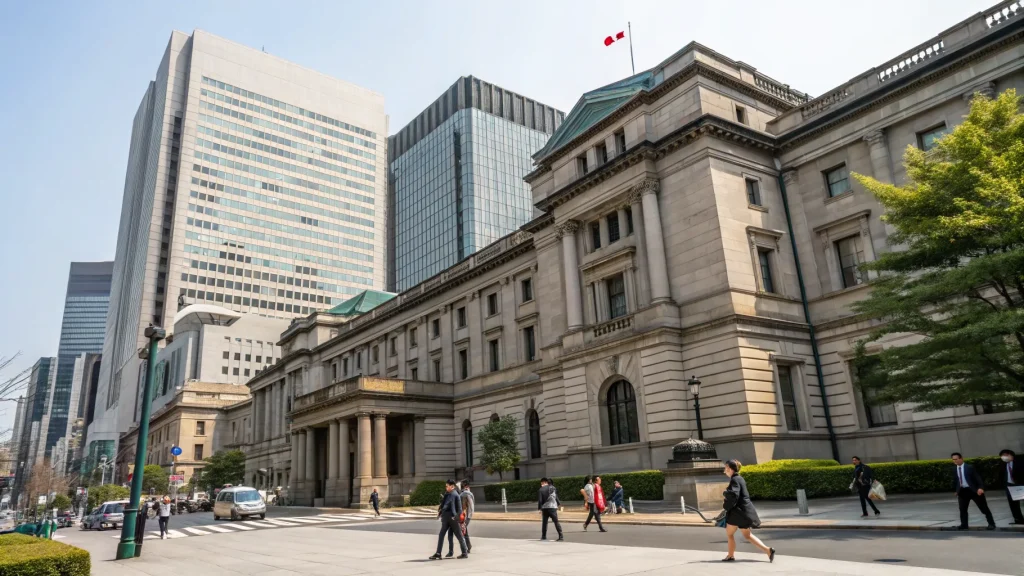
Japan’s central bank took a rare step that ran counter to Prime Minister Sanae Takaichi’s stated preference, moving under pressure from a slumping yen, rising energy costs, and pointed signals from Washington. The decision, made in Tokyo under intense scrutiny, signals a shift in priorities as policymakers try to steady prices and the currency while managing political expectations.
The move highlights a classic tension: political leaders want growth and stability, while central bankers guard price stability and credibility. This time, the gap was visible. The bank acted even as officials close to the prime minister urged patience. Traders read the decision as a sign that the institution would no longer tolerate a rapid slide in the currency or imported inflation driven by energy shocks.
Table of Contents
ToggleWhat Prompted the Shift
Japan’s economy has long leaned on ultra-low interest rates to nudge demand and support investment. But a weaker currency makes imports pricier, and energy is the pressure point. With supply disruptions lifting fuel costs, households and small firms felt the squeeze. Imported inflation began to filter through, challenging the old playbook of cheap money at any cost.
U.S. officials also weighed in. While not dictating policy, they made clear that extreme currency moves can ripple across markets. That raised the stakes for Tokyo. A stable yen is not just a domestic concern; it affects trade partners and global investors who hold Japanese assets.
- External pressure: Concern in Washington about sharp currency swings.
- Currency slide: A falling yen raises import prices and market anxiety.
- Energy inflation: Fuel disruptions are lifting costs for consumers and firms.
Inside the Decision
The central bank framed its action as necessary to protect price stability and restore market order. While officials avoided political commentary, the subtext was clear: credibility matters. Letting the currency drift while living with imported inflation could do more damage later.
“Going against Prime Minister Takaichi’s wishes, Japan’s central bank acted amid U.S. pressure, a tanking currency and inflation from energy disruptions.”
Supporters of the move said waiting longer would risk sharper, more painful steps later. Critics argued the action could slow growth and squeeze borrowers, especially smaller companies that depend on cheap credit. Both sides agree on one point: the old equilibrium is breaking down as energy prices stay volatile.
Political Tensions and Independence
The episode tests the line between elected leaders and an independent central bank. Japan’s postwar system gives the bank operational independence, but coordination with the cabinet is the norm. Public disagreement is rare and often short-lived.
Analysts noted that the prime minister’s team may seek fiscal measures to offset any economic drag. That could include targeted relief for fuel costs or support for lower-income households. Such steps would soften the blow while allowing the bank to keep its focus on prices and currency stability.
What It Means for Markets and Households
For markets, the message is restraint. Currency traders will watch for fewer sudden swings. Bond investors will test how far the bank is willing to go if inflation persists. Equity markets may wobble as financing costs edge up, but exporters could benefit if the yen remains weaker than historical norms, even if stabilized.
For households, the near-term aim is simple: keep imported fuel and food from rising too fast. If the bank’s step steadies the yen, inflation pressure from abroad could ease. If energy shocks continue, the government may have to add fiscal support, or the bank could face another tough call.
Signals to Watch
The path ahead depends on three moving parts: energy prices, U.S.-Japan coordination, and domestic wage gains. If wages rise alongside moderate inflation, the bank gets breathing room. If not, policy trade-offs harden.
- Energy supply and fuel price trends.
- Statements from U.S. and Japanese finance officials on currency stability.
- Wage data from spring labor negotiations and corporate earnings guidance.
The central bank’s decision marks a clear attempt to steady the currency and contain imported inflation, even at the risk of political friction. The immediate test will be market reaction and the next set of inflation and wage data. If the yen stabilizes and energy prices cool, pressure may ease. If not, another round of hard choices awaits—this time with fewer easy options on the table.