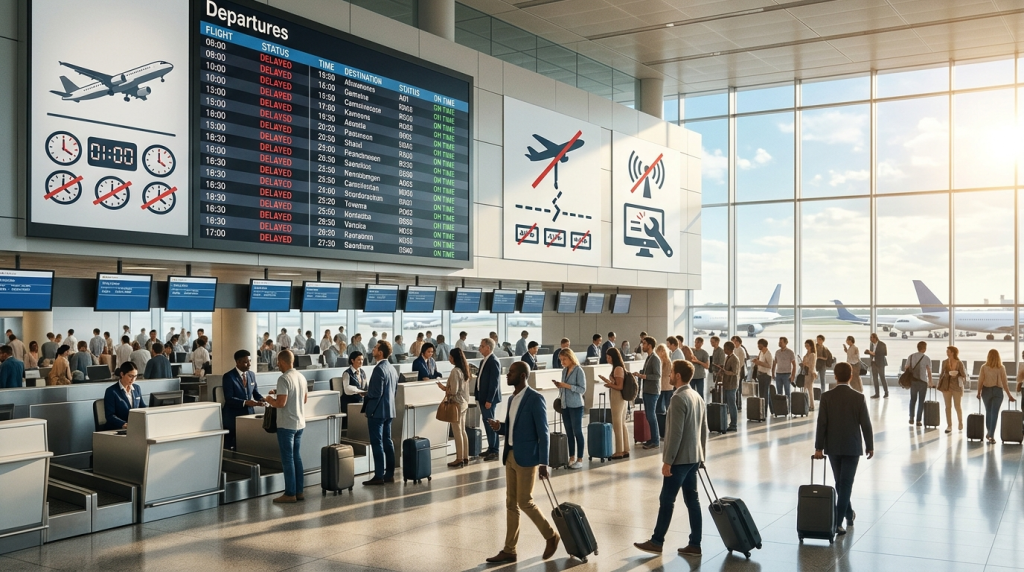
The Federal Aviation Administration said current delays are unrelated to communications systems that failed last week, drawing a clear line between two events affecting aviation operations.
The agency’s statement addresses a key question for passengers and airlines after the recent outage. However, it does not identify the cause of the delays or provide details about their scale, duration, or location.
Table of Contents
ToggleFAA Rules Out a Repeat Failure
The FAA rejected a connection between the delays and the communications disruption from the previous week.
“The delays are not related to its communications systems, which went down last week.”
That distinction matters because communications systems help support the coordination needed for safe and orderly air traffic. A failure can quickly raise concerns about whether controllers, pilots, and airport operators have the information they need.
The FAA’s wording indicates that the recent system problem is not driving the latest slowdown. It does not, however, explain whether the earlier outage has been fully reviewed or what caused that failure.
Cause of Delays Remains Unclear
Flight delays can result from several factors, including severe weather, heavy traffic, runway limits, staffing issues, aircraft maintenance, or airline scheduling problems. The available information does not establish which factor is responsible in this case.
Several key questions remain unanswered:
- Which airports or routes are affected
- How many flights have been delayed
- How long the disruption may continue
- Whether airlines or air traffic operations caused the slowdown
Without those details, travelers cannot yet judge whether the delays are isolated or part of a wider operational problem. Airlines may also face questions about schedule changes if disruption continues.
Recent Outage Adds Public Scrutiny
The timing gives the FAA’s response added weight. Last week’s communications failure remains fresh for passengers and aviation workers. Any new delay may prompt concern that the same technical trouble has returned.
By denying that link, the agency is narrowing the search for an explanation. That can help avoid false assumptions, but it also shifts attention to other possible causes.
The statement offers reassurance on one point while leaving the larger operational picture incomplete. In aviation, ruling something out is useful, though it is not the same as identifying what went wrong.
What Passengers Should Watch
Travelers affected by delays will need more specific information from the FAA, airports, or their airlines. Updates on departure boards and airline applications may provide the quickest details about individual flights.
Future FAA statements could clarify the source and reach of the disruption. Information about last week’s outage may also show whether repairs, reviews, or safeguards are planned.
For now, the central finding is limited but important: the FAA says the delays are not tied to last week’s communications failure. The next test is whether officials can explain the actual cause and give passengers a reliable timeline for normal service.