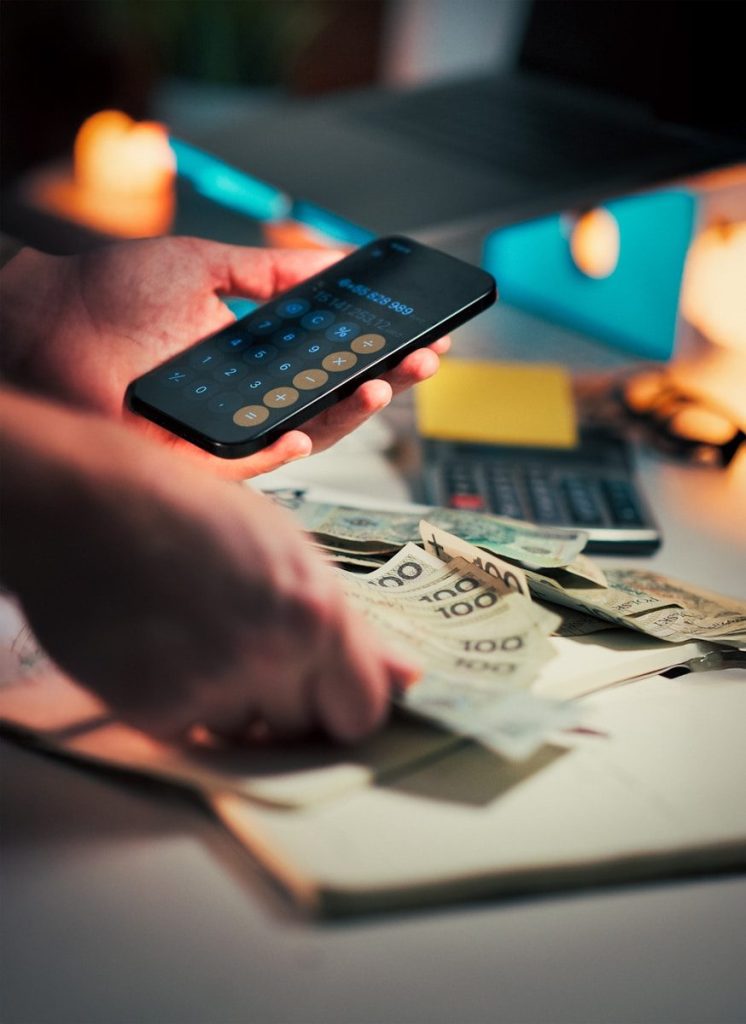
Three months ago, I decided to track every single dollar that left my bank accounts. Not the big stuff — I already knew what my mortgage and car payment cost. I’m talking about every coffee, every subscription, every impulse buy, every convenience fee. By the end of 90 days, I’d found $1,200 in monthly spending I couldn’t justify — and the experience fundamentally changed how I think about money.
Table of Contents
ToggleThe Experiment That Changed Everything
The idea started after reading a NerdWallet study that found the average American spends $219 per month on subscription services alone — and that 42% of consumers are paying for subscriptions they’ve forgotten about. I suspected my own spending had similar blind spots, but I had no idea how large they actually were.
I used a combination of Mint and a simple spreadsheet to categorize every transaction across all of my accounts: two credit cards, a debit card, Venmo, PayPal, and cash. For 90 days, nothing escaped documentation.
The results were humbling. My total “invisible spending” — transactions I couldn’t remember making or would have guessed were much smaller — averaged $1,247 per month. Over a year, that’s nearly $15,000 in spending that was essentially invisible to my conscious financial planning.
Where the Money Was Actually Going
The biggest surprises weren’t the purchases I didn’t remember — they were the ones I drastically underestimated:
Convenience markups: $340/month. This was the category that shocked me most. Food delivery surcharges, express shipping fees, ATM fees, late payment penalties on bills I forgot to automate, and premium pricing for last-minute purchases. According to a JPMorgan Chase Institute study, the average American household pays roughly $4,000 per year in convenience premiums — fees that exist purely because we didn’t plan ahead.
Subscription creep: $187/month. I was paying for 14 active subscriptions. I regularly used six of them. The other eight — including a meditation app I hadn’t opened in seven months, a cloud storage upgrade I didn’t need, and a news site I could read for free through my library — were quietly draining $187 every month. Cutting these types of recurring costs is one of the fastest ways to reclaim your budget.
Lifestyle inflation micro-purchases: $289/month. The $7 oat milk latte instead of the $4 drip coffee. The $18 lunch instead of the leftovers in the fridge. The $35 Uber instead of the $12 subway ride. None of these individual purchases seemed significant. Combined, they represented nearly $3,500 per year in gradual lifestyle creep — a pattern that quietly undermines wealth building.
Impulse online shopping: $216/month. Amazon’s one-click ordering is engineered to bypass the rational spending part of your brain. My tracking revealed an average of 12 non-essential Amazon purchases per month, with an average order value of $18. A Consumer Financial Protection Bureau report found that frictionless payment interfaces increase discretionary spending by 20% to 30% compared to cash transactions.
Bank and credit card fees: $87/month. Foreign transaction fees, interest charges from carrying a balance one month, annual fees on a card whose benefits I wasn’t using, and overdraft charges from poor account monitoring. These were pure waste — money paid for nothing.
The Psychological Traps Behind Invisible Spending
What struck me most wasn’t the amount — it was the psychology. Behavioral economists have identified several cognitive biases that make this kind of spending invisible:
The pain of paying affects. Research from MIT shows that paying with credit cards activates less of the brain’s pain response than paying with cash. Digital payments reduce this friction even further. When spending doesn’t feel like losing money, we spend more.
The “latte factor” illusion. Ironically, obsessing over small purchases can backfire. When we focus only on the $5 coffee while ignoring the $340 in monthly convenience fees, we create an illusion of financial discipline while the real leaks continue unnoticed.
Anchoring to monthly income. When you earn $6,000 a month, a $15 subscription feels like a rounding error. But 14 rounding errors add up to a significant line item — one that compounds into real opportunity cost when you consider what that money could earn invested over decades.
What I Did With the $1,200
After identifying my spending leaks, I didn’t try to eliminate all of them. That’s a recipe for willpower fatigue and eventual failure. Instead, I prioritized:
I canceled eight subscriptions immediately, saving $187/month. I implemented a 48-hour rule for all non-essential purchases over $25, which cut my impulse buying by roughly 60%. I batch-cooked lunches twice a week, reducing my spending on convenience food by about $150/month. And I set up automatic payments for every recurring bill, eliminating late fees entirely.
The net result was approximately $800 per month in recaptured spending — money I now split between my emergency fund and a low-cost index fund in my brokerage account. At an 8% average annual return, that $800 per month will grow to roughly $475,000 over 20 years.
How to Run Your Own 90-Day Audit
You don’t need special tools to do this. A free app like Mint or a basic spreadsheet works fine. The key is categorizing every transaction — not just the total amount — so you can see where the patterns emerge.
Start by downloading three months of bank and credit card statements. Tag each transaction with a category: essential (housing, utilities, groceries), planned discretionary (entertainment, dining out), and unplanned discretionary (impulse buys, forgotten subscriptions, convenience fees). That third category is where the leaks live.
If your household costs have been rising with tariff-driven inflation, this exercise becomes even more valuable. When external prices are climbing, eliminating internal waste is the fastest way to protect your standard of living.
The Bottom Line
Tracking every dollar for 90 days was uncomfortable, tedious, and genuinely eye-opening. The $1,200 monthly leak I discovered wasn’t dramatic — it was mundane. That’s exactly what made it so dangerous. The money wasn’t disappearing into bad investments or catastrophic mistakes. It was evaporating through hundreds of tiny decisions I never consciously made.
The best financial advice I can give anyone right now: before you try to earn more, find out where your current earnings are actually going. The answer might fund your retirement.