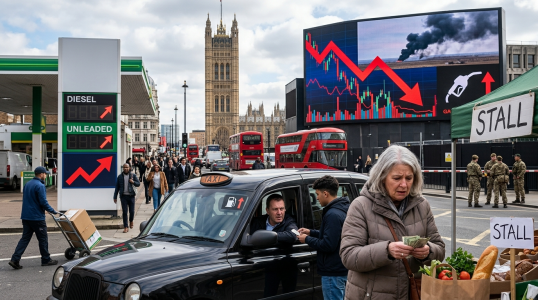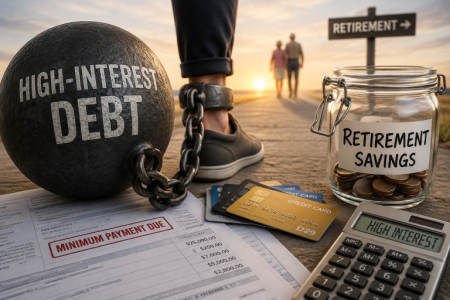
We’re officially retiring the $1,000 “emergency fund.” Why? Today’s AI-disrupted career paths and relentless cost of living have turned that old safety net into a slippery slope. Still, 53% of Americans are unable to cover even the most basic setbacks, let alone a $1,000 setback — according to Banrate. Further, nearly one-third of Americans now carry more credit card debt than cash, making “winging it” a liability rather than a strategy.
To achieve true resilience these days, it’s necessary to have an ecosystem of liquidity, optimized insurance, and a stress-tested lifestyle.
Table of Contents
ToggleThe Modern Emergency Fund: How Much is Enough?
The classic motto of “3 to 6 months of expenses” remains sound advice. But nowadays, you need a more nuanced strategy based on your own risk profile.
The multiplier strategy.
Rather than a generic number, select one that corresponds to your specific life situation:
- 3 months (the “lean” fund). This option is ideal for households with two incomes, low debt, and high demand for skills.
- 6 months (the “standard” fund). This is the baseline for single-income families, those with children, and professionals in moderately volatile fields.
- 9–12 months (the “safety” fund). Highly recommended for freelancers, business owners, or those who work in cyclical industries (such as tech or real estate) where job searches may take months.
Calculating “core” vs. “lifestyle” expenses.
If you’re calculating your target, don’t use your current earnings. You should instead sum up your Core Survival Expenses as follows:
- Housing. Rent/Mortgage, property taxes, and insurance.
- Utilities. Power, water, and essential internet/mobile.
- Nutrition. A “grocery store only” budget — ditch Uber Eats.
- Transportation. Car payments, gas, or transit passes.
- Obligations. Insurance premiums and minimum debt payments.
The Generational Gap: Who is Actually Prepared?
These days, emergency savings vary significantly by age. For example, Baby Boomers hold the largest median balances, but Gen Z and Millennials are more likely to experience a “zero-savings” crisis.
Baby Boomers: Traditionalists who love cash.
With a median emergency fund of $2,000, boomers maintain the strongest safety nets.
In one survey, 69% of respondents said they carry cash in case of an emergency, and 42% said market uncertainty led them to prioritize cash over other investments. However, only 26% of them use High-Yield Savings Accounts (HYSAs). Therefore, many people are missing out on favorable returns of 4% or more.
Gen X: The strained “sandwich generation.”
Mortgages, college tuition, and retirement catch-up all compete for a median fund of $500 among Gen X.
The result? As noted by the previously mentioned Bankrate report, only 20% have enough money to cover six months’ expenses. Although interest rates are high, they still stick to traditional cash savings like Boomers.
Millennials: The agile seekers.
Student loans, rising rent, and inflation have largely led millennials to carry a median fund balance of $300.
Yet they’re also the most proactive, with 32% seeking financial advice. In addition, millennials prefer HYSAs because they make their smaller balances work harder.
Gen Z: The frugal beginners.
Gen Z has an average emergency fund of $400, but 25% have no emergency savings. However, 33% have consulted a financial professional to begin.
To build a safety net faster, they’re embracing “revenge saving” and alternative assets like crypto.
Where to Stash the Cash: Liquidity vs. Growth
In today’s high-yield environment, your emergency fund shouldn’t just sit in a 0.01% checking account. After all, you want your money to work for you, but it must be accessible.
| Account Type | Typical 2026 APY | Best For | Accessibility |
| High-Yield Savings (HYSA) | 4.0% – 5.0% | The bulk of your fund | 1–3 days (ACH transfer) |
| Money Market Account (MMA) | 3.8% – 4.2% | Immediate “Tier 1” cash | Instant (Debit card/Checks) |
| No-Penalty CDs | 4.2% – 4.7% | “Tier 2” (Months 4–6) | 3–7 days |
Bonus Tip: Take a layered approach. Essentially, keep $2,000 in a Money Market Account with a debit card to cover “right now” emergencies (a burst pipe), and the rest in a High-Yield Savings Account to handle “slow-burn” emergencies (a layoff).
Beyond the Cash: The Four Pillars of Preparedness
Emergency funds are just one part of the equation. For instance, if your house burns down or you suffer a major medical crisis, $2,000 or even $10,000 will not be enough. As such, you need to reinforce these four pillars:
I. The insurance audit.
When catastrophic events occur, insurance serves as an emergency fund. As such, true durability requires:
- Health. Keep enough cash in your savings to cover your “Out-of-Pocket Maximum.”
- Disability. A person’s chances of becoming disabled during their working years are higher than their chances of dying. So, if you don’t have long-term disability insurance, consider getting one — either through your employer or privately.
- Property. Due to inflation in construction materials, many homeowners are experiencing “replacement cost” gaps. Therefore, check your policy to make sure it covers the current cost of rebuilding.
II. The “in case of emergency” (ICE) digital vault.
There is a risk associated with physical documents. As a countermeasure, create a secure, encrypted digital folder containing:
- Passports and Social Security cards.
- Contact information for insurance agents and policy numbers.
- A “Letter of Instruction” for your spouse or heirs.
- Front and back photos of all credit/debit cards.
III. Credit as a bridge, not a safety net.
High-limit credit cards with a $0 balance or Home Equity Lines of Credit (HELOCs) are great secondary defenses. When you’re waiting for an insurance payout or a bank transfer, “available credit” serves as a bridge. But don’t use it as your primary emergency fund.
IV. The “sinking fund” distinction.
A predictable expense can be mistaken for an emergency, which will quickly hollow out your defenses. To keep your emergency fund “sacred,” you must draw a hard line between the two-both mentally and physically.
- The emergency fund (the “unexpected”). This is for those “lightning strike” moments. Your transmission blows up without warning, or a freak storm leaves your living room exposed. You can’t budget for these; you can only be prepared.
- The sinking fund (the “inevitable”). This is for the slow-moving arrivals. When your tires are 40,000 miles old, or your roof is 20 years old, a replacement isn’t an “accident”; it’s an appointment.
As a general rule, if you can see it coming, it belongs in the sinking fund. If you divide these into different accounts, you will ensure that when a real crisis occurs, you will still have your “sacred” cash on hand.
How to Start (When You’re Starting from Zero)
It can seem impossible to build a 6-month cushion. To make it less overwhelming, break it down into “boss levels.”
- Level 1: The $1,000 buffer. As a result, “small” emergencies do not turn into credit card debt.
- Level 2: One month’s core expenses. If you lose your job, you will have time to weigh your options.
- Level 3: Full protection. You should continue working towards your 3-12-month goal until you achieve it.
The Automation Engine: Making Consistency “Invisible”
Rather than a market crash, decision fatigue is the biggest threat to your emergency fund. After all, if you must choose between saving every month, eventually you won’t. With automation, your defense system can be set and forgotten.
- The “invisible” split. You can ask your HR department to split your direct deposit. By setting up a separate High-Yield Savings Account (HYSA), you can consistently save money for emergencies.
- The payday sweep. Alternatively, schedule an automatic bank transfer to trigger the day after payday if a direct deposit split is not an option. By doing this, you’re paying yourself first before you’re tempted to pay your monthly bills and live a frugal lifestyle.
- AI-driven micro-savings. You can use fintech apps like Oportun or Qapital to analyze your cash flow in real-time. In many cases, these tools build a buffer for you without you ever noticing the change, as they identify “safe-to-save” amounts based on your spending habits and move small increments automatically.
- The “round-up” accelerator. Enable round-up programs through your banking app or apps like Acorns. When you round up every digital purchase to the nearest dollar and sweep the change into your fund, you’re essentially investing in your own stability.
Summary: Peace of Mind is the Ultimate ROI
The key to financial preparedness is not pessimism; it’s durability. With the right insurance in place and a robust emergency fund, you stop making financial decisions based on fear. With a little preparation, you can take career risks, sleep better at night, and handle everything life throws at you.
FAQs
Is an emergency fund still necessary if I have a high credit limit or a HELOC?
While credit is an excellent “secondary” defense, it should never replace cash reserves. During a true economic downturn, banks can freeze Home Equity Lines of Credit (HELOCs) and lower credit card limits without notice — often when you need them the most. When the market gets volatile, the only source of liquidity that will remain constant is cash in a high-yield account.
Should I pay off high-interest debt or build my emergency fund first?
In general, it’s best to use the “starter fund” approach. Before aggressively attacking debt, save $1,000 to $2,000 as a “Level 1” buffer. This will prevent you from backsliding into debt when an emergency medical bill or car repair arises. After you have built up a small cushion, focus on high-interest debt (over 7–8%). Then return to finishing your 3–6 month emergency fund.
When is it actually “okay” to use the money?
Three criteria define an emergency: Are they unexpected, necessary, and urgent?
- Yes. An emergency dental procedure, a job loss, or a broken HVAC unit during winter.
- No. A once-in-a-lifetime travel deal, a budget shortfall for holiday gifts, or a down payment on a new car. You should put planned or predictable expenses into a sinking fund, not your emergency reserve.
Where should I keep my emergency fund to strike the best balance between growth and access?
An ideal place would be a High-Yield Savings Account (HYSA) or a Money Market Account (MMA). With these, you can earn competitive rates (often 4.00% to 5.00%) while keeping your money liquid (you can transfer the money to your checking account within 1–3 business days).
Do not invest this money in the stock market or long-term CDs, since a market dip could shrink your safety net just when you need it.
I’ve reached my 6-month goal—should I keep saving or start investing?
After reaching your target multiplier (3, 6, or 12 months), you should stop “saving” and start “investing.” If you have surplus funds beyond your safety net, you should invest them in tax-advantaged retirement accounts (like a Solo 401(k) or an HSA) or brokerage accounts that will grow over the long term.
An emergency fund isn’t a wealth-building tool; it’s insurance. Therefore, as soon as the insurance is paid up, put your capital to work elsewhere.
Image Credit: Albert Costill/ChatGPT
Related Reading: An emergency fund is one piece of the puzzle. Strengthen the rest by building financial literacy.