I had a rare moment that ran against my usual free-market instincts. I asked myself a blunt question: who actually wants artificial intelligence, and who is it helping right now? As a wealth advisor and a long-time market participant, I’ve enjoyed the AI-related rally. But I’m also a citizen, a parent, a neighbor, and a payer of utility bills. The tension between those roles is getting harder to ignore.
The promise is clear: smarter tools, faster work, and new businesses. But there is also a cost that is landing in the real world. Electricity bills are up. Data centers are soaking up power. And the very “efficiencies” being praised by Microsoft, Meta, and NVIDIA could mean fewer jobs. Researchers at MIT estimate that AI could replace about 12% of jobs. That is roughly one worker in nine. It’s not a vague future. It’s a near-term challenge for households and workers.
“All of our electricity costs are up 7%. Thank you to the data centers backing AI for using all the electricity to fund the very technology that could replace 12% of all jobs.”
Table of Contents
ToggleThe Productivity Pitch vs. People’s Paychecks
AI’s supporters lead with productivity. I see it too. My own output is up, though only marginally. Drafts move faster. Data gathering takes minutes instead of hours. That is real. But productivity is not the same as prosperity for everyone. Gains at the company level do not always map to gains for the worker whose task can be automated.
Executives highlight “efficiency” in earnings calls. The plain-English translation often reads like this: do more with fewer employees. If that shift happens across many firms at once, it can show up as a stronger bottom line for shareholders and a thinner job market for displaced staff. I invest, but I also advise families. Layoffs ripple through budgets, retirement plans, and community life. We should weigh that impact with clear eyes.
Yes, new roles emerge in every wave of change. But reskilling takes time, money, and access. Workers nearing retirement have less runway to pivot. Young workers can’t train for what they can’t see. If one in nine roles is exposed, the churn could be large before the new opportunities mature.
View this post on Instagram
The Energy Bill Nobody Voted For
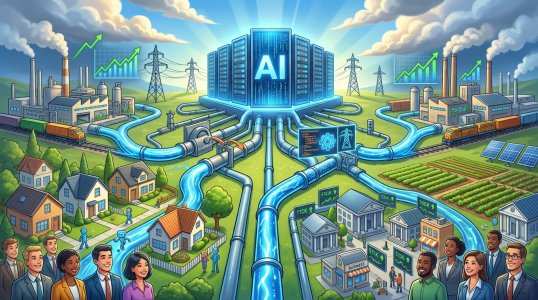
Data centers are the backbone of AI. They run nonstop. They need massive power and cooling. If you live near a growing hub, you can feel it in local grids and, in some areas, in power pricing. My utility bill is up. Many households are seeing the same. Correlation is not causation, but the buildout is real and accelerating.
When computing needs surge, electricity demand follows. Utilities plan years ahead, but AI arrived hot and fast. The result is strain in some regions and a wave of new power projects. Natural gas plants, wind, solar, batteries—everything is being considered to meet round-the-clock load. For investors, this points to opportunities in AI private infrastructure growth. That building costs money. In many markets, ratepayers carry a share of those costs.
So a tough question sits at the center of this story: should households be footing higher bills so that a handful of companies can mint record profits by building AI capacity? That’s not anti-business. It’s a fairness question about who pays and who gains.
Winners and Everyone Else
There’s no doubt who’s winning today. NVIDIA’s hardware sits at the heart of the boom. Microsoft and Meta are racing to deploy models across their products. Investors who recognized the trend early have been rewarded. I’m one of them. As a fiduciary, I follow the data and seek returns for clients. AI has been a driver of market performance.
But investing returns and community outcomes can pull in different directions. That friction is widening. If companies boost margins through automation while passing on energy-related cost pressures to consumers, households take a hit on both fronts. Income risk on one side, higher living costs on the other.
When that happens, inequality widens. Owners of capital benefit. Wage earners face headwinds. We’ve seen versions of this through past technology cycles. AI’s scale may make the split sharper because its reach crosses industries quickly—media, customer support, coding, legal review, design, and more.
What We Know, What We Don’t
- MIT researchers estimate AI could replace around 12% of jobs. That is a meaningful share of the workforce.
- Productivity gains are real but uneven — a pattern consistent with past technology trends. Some tasks speed up; some roles disappear.
- Data center buildouts are surging. Power demand and infrastructure needs are rising in step.
- Households are feeling higher utility costs. In some regions, rates reflect pressure from new load and investment.
- Equity investors have benefited from AI leaders. Not every worker or consumer shares in those gains.
There’s also a lot we don’t know. We don’t know how fast AI will move from pilot projects into everyday workflows. We don’t know which regulations will land. We don’t know the long-run net job effect once secondary and tertiary roles appear. But uncertainty is not an excuse for inaction.
A Practical Framework for Households
Families should prepare even if the worst-case scenario never arrives. A few steps can help reduce risk and improve resilience.
- Build a larger cash buffer. If your role involves any automation, aim for more months of expenses saved.
- Audit your skills. List the parts of your job that are routine and the parts that are human-driven—judgment, relationships, creativity.
- Invest in the human edge. Communication, leadership, client empathy, negotiation, and domain know-how tend to hold value.
- Use the tools. Learn the AI systems in your industry. Being the person who can multiply a team’s output is a sign of job security.
- Diversify income where possible. Side projects or freelance work can soften shocks and open doors to new fields.
These are not silver bullets. But they move leverage back toward the worker. You do not need to master every model. You do need to show that your seat adds more value with AI than without you.
How Companies Can Share the Upside
If boards and executives want public support for AI, they should match efficiency with responsibility. The steps below are not charity. They are risk management and long-term strategy.
First, invest in training. If AI trims tasks, help staff climb the value chain. That means paid upskilling with real pathways to new roles. Second, reward productivity gains. If output per worker rises, share part of the surplus through wages, bonuses, or equity. Third, mind the energy tab. Pair data center growth with local investments in generation, storage, and efficiency so communities are not left holding the bill.
Companies should also communicate clearly. Don’t hide behind buzzwords. Explain which roles will change, what support exists, and how success will be measured. Workers can handle candor. They resent spin.
What Policymakers Could Do Without Smothering Innovation
Markets work best with clear rules. The goal is not to freeze progress. It’s to align incentives so that broad prosperity remains the target.
Consider portable training benefits, funded through a mix of employer contributions and tax credits, that follow workers across jobs. Speed permitting for power projects that add capacity near data centers, with local rate protections. Encourage demand-response programs and efficiency upgrades that lower household bills. Make it easy for small businesses to access AI tools so they can compete with large incumbents rather than get steamrolled by them.
Transparency also helps. Companies that benefit from public support or infrastructure should disclose how productivity gains translate into hiring, wages, and community investment. When sunlight shines on the trade-offs, trust improves.
Investor Hat vs. Citizen Hat
I wear two hats. As CEO of LifeGoal Wealth Advisors, my job is to find opportunities and manage risk. AI is a force in both. As a citizen, I worry about the gap between shareholders and wage earners. Higher utility bills, thinner payrolls, and fatter margins create a fragile mix. That fragility shows up in politics and in social trust—two things markets need to thrive.
I do not think AI is doom. I do think the current playbook concentrates gains in too few hands while spreading costs across many. It’s great for certain CEOs. It is not obviously great for every household to have a higher energy bill. We can fix that imbalance with the choices available now.
“It’s great for Jensen Huang, but it kinda feels like a raw deal for most.”
A Personal Check-In on Productivity
People often ask whether I feel more effective with AI. The honest answer is yes, but not by a mile. I save time on research and first drafts. I still spend the most time on judgment—what to do, what to avoid, and how to explain trade-offs to clients. The tool is a speed boost. It is not a strategy.
That gap is important. If your role is purely execution, AI will press hard. If your role blends execution with decisions, relationships, and accountability, AI becomes a helper. The line between those two categories is where careers will be made or lost over the next few years.
What I’m Watching Next
A few signals will tell us whether this story bends in a healthier direction.
- Wage growth for mid-skill roles in AI-exposed sectors. If wages rise, firms share gains.
- Household energy inflation in high data-center regions. If bills stabilize, infrastructure is catching up.
- Training throughput and placement rates. Are displaced workers landing in equal-or-better jobs?
- Small business adoption. Are local firms using AI to win customers, or losing them to giants?
- Corporate disclosures on productivity and headcount. Do efficiency gains lead to growth or only cuts?
These are not academic markers. They show up in real paychecks and household budgets. If they move the right way, the social contract holds. If not, the backlash will grow, and with it the pressure for blunt policy that helps no one.
Bringing It Back to Households
For families, focus on what you can control. Reduce waste in your power usage and lock in better rates where possible. Map your job to the skills that will matter. Put some of your savings to work in diversified vehicles that can benefit from long-term trends without betting the farm on any single name. Keep cash for flexibility. Build relationships that a model cannot replicate.
For leaders in tech and finance, show your work. Put real dollars into reskilling. Invest in local energy solutions. Share the gains with the people who carry the load. You will still hit your numbers. You will also build the trust that keeps the path open for the next wave.
AI can be a net positive. It will take deliberate choices to make it so. Right now, the scorecard reads like this: strong returns for shareholders, rising utility bills for families, and real anxiety for workers. We can adjust the rules and the culture to shift that balance.