The classic American retirement picture involves moving to a planned, age-restricted community. Although this vision may work for some, the financial realities of retirement living demand more cost-effective and diverse options.
But what if your house is already the best retirement plan?
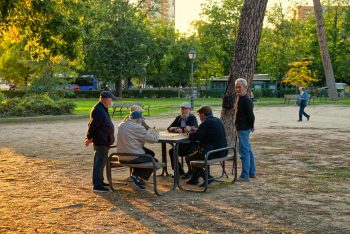
As the population of older adults ages, more and more neighborhoods are becoming Naturally Occurring Retirement Communities, or NORCs. Unlike planned communities with high entry fees, these communities developed because local residents remained in the area, aged together, and built strong ties within the community.
Among the most overlooked retirement options, NORCs are cost-effective, empowering, and easy to set up. Despite long-term care costs being a major concern, they offer independence without isolation.
Here’s why NORCs matter, how they work, and how you can benefit from this hidden solution for successful aging in place.
Table of Contents
ToggleExactly what is a NORC? The Organic Alternative
The term “Naturally Occurring Retirement Community” was coined by Michael Hunt, a professor of urban planning at the University of Wisconsin-Madison, in the 1980s. However, the concept is as old as neighborhoods themselves. Generally, a NORC is any residential area with a high concentration of older adults, regardless of whether it is a neighborhood of single-family homes, a high-rise apartment building, or a mobile home park.
According to policymakers and researchers, a community with at least 40% of households headed by older individuals is one in which older individuals are predominant.
NORCs can be formed in three ways:
- “Aging in place.” This is the most common scenario. People move into a community when they are younger (say, in their 30s or 40s) and stay. The community ages along with them, creating a dense population of long-time, established senior residents.
- “Aged-left-behind.” Younger generations move away for job opportunities or other reasons, leaving older residents behind who have retired or are deeply rooted in their communities.
- “In-migration.” In existing, non-age-restricted areas, older adults are often attracted by accessible housing, good public transportation, and abundant essential services. A gradual increase in the senior population will lead to reaching the NORC threshold.
A key differentiator is the word “naturally.” They’re not planned communities that require homeowner associations or sales offices. Instead, these are existing neighborhoods that have become havens for older adults who wish to remain independent through natural processes.
The Financial Edge: Why NORCs are a Smart Money Move
The economic benefits of a NORC are perhaps its strongest argument. Compared with traditional, planned Continuing Care Retirement Communities (CCRCs) and age-restricted active adult communities, NORCs offer significant financial savings.
A zero-to-low entry cost.
There is often a hefty entry fee for planned retirement communities, particularly CCRCs, in addition to monthly maintenance costs. In addition to representing a massive, upfront financial drain, this fee acts as a down payment for future care.
In a NORC, you own or rent your home as you would anywhere else. A special “retirement community” buy-in is not required. Without proprietary contracts or complex fee structures tying up your capital, you maintain full control over your primary asset. In terms of retirement investments, this is a game-changer.
Lower monthly expenses.
As a standard neighborhood, a NORC generally avoids the high, bundled monthly fees found in planned communities, despite variations in cost of living by location. No matter if you use the amenities, such as clubhouses and golf courses, these fees are included.
As a NORC resident, you pay your regular mortgage/rent, utility bills, and property taxes. In the case of supportive services programs (more on this below), their fees are often minimal, especially if they’re subsidized by government grants or non-profit partners. Rather than paying for luxury amenities you might not use, you pay for the services you need.
Preserving home equity.
Many retirees consider their home to be their most valuable asset. NORCs allow homeowners to retain ownership of their homes, ensuring this important asset can be used for long-term care, as a legacy, or as a hedge against inflation. In communities using leases or specialized equity structures, financial control is often limited.
Beyond the Budget: Community and Quality of Life
Despite the strong financial argument for NORC, it’s its ability to foster a sense of community and aging in place that makes it so compelling.
Retaining familiarity and social capital.
With a NORC, you can remain in the neighborhood and home where you have already established a life for yourself, such as;
- Established social networks. You can keep your neighbors, local friends, favorite coffee shop, and religious community. In later life, social capital can be a powerful antidote to isolation and loneliness — and if you’re looking to expand your circle, here’s how to make new friends after 60, often associated with major life changes.
- Familiar services. It’s not necessary to change doctors, banks, or grocery stores. Your local resources, which took decades to establish, remain intact.
- Intergenerational connection. A NORC is a mixed-age community rather than an age-restricted one. By interacting with younger families through intergenerational living, you remain connected to the broader community, which is essential for mental stimulation.
The Power of NORC Supportive Service Programs (NORC-SSPs)
One of the most innovative and beneficial aspects of a formalized NORC is its Supportive Service Program (NORC-SSP). Typically, these programs are partnerships among residents, a non-profit social service agency, and a municipality or state.
A NORC-SSP aims to make aging in place both feasible and sustainable by bringing services to residents. Depending on the community’s needs, services may include:
- Case management and social work. Assisting residents with Medicare, Medicaid, and other public benefits.
- Health and wellness. Services such as blood pressure screenings, visiting nurses, yoga and Tai Chi classes, and chronic disease management.
- Ancillary support. The coordination and management of transportation, light home repair services, volunteer visitor programs, and social/educational activities.
- Efficiency of scale. As a result of the geographic concentration of residents in a NORC, social workers, nurses, and other service providers have a much easier job delivering care to them. Ultimately, this efficiency reduces the cost per person for vital services.
This model is a brilliant example of practical community design. By leveraging the high density of older adults in a neighborhood, the NORC-SSP helps delay or even prevent the need for expensive, higher-level institutional care.
How to Find and Utilize a NORC
A NORC is not advertised on TV or on a retirement website. Due to their “natural occurrence”, you must seek them out.
Check your current home.
Start with the easiest step: are you already a member of a NORC?
- Gauge the demographics. Check out the neighborhood or apartment building where you live. Are many of your neighbors in their 60s, 70s, or older?
- Inquire locally. You can also contact your local Area Agency on Aging, community center, or the management of your apartment complex. It’s common for NORCs to be formally recognized for grant funding, especially in major cities.
Research potential new locations.
You should keep the following criteria in mind when planning a relocation;
- Walkability and transit. Ideally, you should look for a neighborhood with a high walkability score, reliable public transportation, and proximity to groceries, pharmacies, and medical facilities. Seniors are attracted to these convenient NORCs for good reasons.
- Look for SSPs. If you are considering a city or town, look for the “NORC Supportive Service Program”. SSPs are like communities that have already established their support systems.
- Housing type. NORCs are often formed in well-maintained housing cooperatives, condominiums, or apartment complexes that offer maintenance-free living without age restrictions.
Final Thought: You May Already Be Home
With a NORC, you don’t have to relocate or uproot your life. Perhaps you already live in a community with all the essential ingredients — stability, connection, and shared aging.
It’s possible to create an age-friendly, affordable, vibrant neighborhood with a little organization, support services, and community tools.
Ultimately, a NORC reminds us that home and community often provide the best retirement solution — not a new development.
FAQs
Why are NORCs becoming more common?
Most older adults prefer to age in place, and staying at home is cheaper than assisted living, which averages $6,129 per month ($73,548 annually) per month. In addition, they prevent loneliness by keeping long-time neighbors in touch. NORC Supportive Service Programs (NORC-SSPs), which provide transportation, health care, and social activities directly into communities, are also becoming increasingly popular among cities and nonprofits.
What challenges do NORCs face?
Some NORCs lack funding or formal support services. Rural areas can have limited transportation, and older homes may require safety upgrades, such as railings or ramps. Burnout is also a concern in communities that rely heavily on neighborly assistance.
However, through partnerships with nonprofits and local agencies, many challenges can be overcome.
Who is a good fit for a NORC?
A NORC is ideal for people who want to age in place, value independence, and prefer community living to institutional living. These are a good choice for retirees on fixed incomes or those who enjoy long-term neighborhood relationships. NORCs may be the perfect choice if you want a supportive, affordable way to stay rooted in your community.
Image Credit: Gonzalo Carlos Novillo Lapeyra; Pexels