The upcoming Iowa State Fair will give political candidates a brief but valuable chance to win voters, attract national coverage, and test their campaign messages.
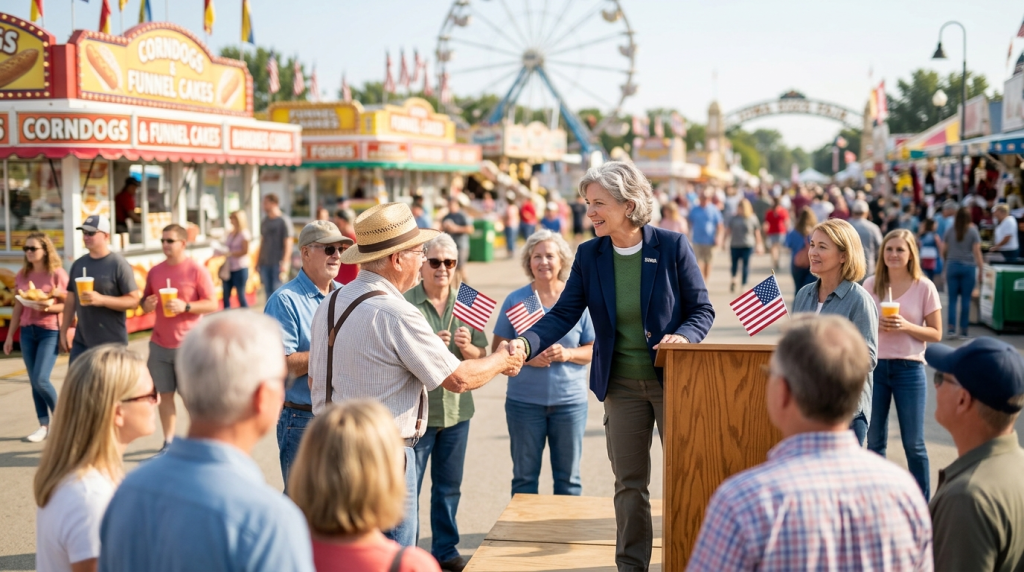
The annual gathering in Des Moines mixes politics with livestock, food, and entertainment. Candidates can meet voters face to face while reporters watch every handshake, speech, and fried-food photo.
No candidates or election cycle were specified. Still, the fair has long served as an important campaign stop, especially before Iowa’s presidential nominating contest.
“The upcoming Iowa State Fair is a pivotal window of opportunity for candidates on the campaign trail.”
Table of Contents
ToggleWhy the Fair Matters
Retail politics remains central to campaigning in Iowa. Voters often expect candidates to answer questions directly rather than rely only on television advertisements or polished online videos.
The fair offers that access in a crowded public setting. A candidate may speak to farmers, union members, small-business owners, students, and retirees during one visit.
That mix can reveal whether a campaign message works outside a carefully managed rally. It can also expose weak answers, awkward interactions, or gaps in policy knowledge.
For lesser-known candidates, the reward may be larger. A strong speech or memorable exchange can produce media attention that would otherwise cost heavily in advertising.
A Political Tradition With High Stakes
Iowa has held an early role in presidential politics for decades. Its caucuses have often shaped media coverage, fundraising, and perceptions of candidate momentum.
The state’s nominating process has changed over time, and its influence has faced criticism. Opponents argue that Iowa does not fully represent the nation’s racial and geographic diversity.
Supporters say its smaller communities reward personal campaigning. They argue that candidates with limited money can compete through repeated local visits and direct voter contact.
The State Fair brings those arguments into one place. It is both a public celebration and an informal political examination, complete with cameras and corn dogs.
What Campaigns Will Measure
Campaign teams are likely to judge more than crowd size. They will watch how voters respond, which issues draw questions, and whether volunteers can turn interest into support.
- Candidate performance during public speeches and interviews
- Voter reactions to economic and agricultural policies
- Local and national news coverage
- Volunteer recruitment and campaign organization
- Social media response to unscripted moments
Economic concerns may carry special weight. Iowa voters often focus on farm income, trade, energy, health care, education, and the cost of living.
Candidates must also balance local concerns with national themes. A message designed for a national audience may fall flat if it ignores problems facing rural communities.
Opportunity Comes With Risk
The fair’s open setting limits campaign control. Protesters may appear, voters may ask difficult questions, and brief mistakes can travel quickly online.
That uncertainty is part of the event’s value. Candidates who remain calm and specific can show political skill. Those who retreat into rehearsed lines may struggle to build trust.
Media coverage can also distort the contest. A humorous photo or verbal mistake may receive more attention than a detailed policy proposal. Campaigns therefore face a familiar problem: substance matters, but spectacle often gets the better camera angle.
The fair will not decide an election by itself. It can, however, show which candidates connect with voters and which campaigns are prepared for close public scrutiny.
The key signs will be message discipline, voter engagement, and organizational follow-through after the fair ends. Candidates may arrive seeking attention, but the stronger campaigns will leave with names, volunteers, and a clearer understanding of Iowa voters.