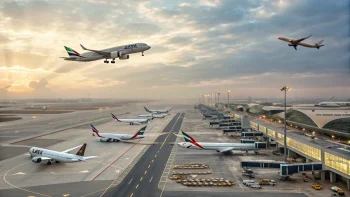
Air travel across the Middle East and the United Arab Emirates faced sweeping delays and diversions after renewed conflict in Iran rattled flight plans and shut key air corridors. Airlines rerouted jets, airports adjusted schedules, and passengers scrambled for updates as carriers weighed safety against schedule integrity amid fast-moving events.
The disruptions rippled from major hubs in the Gulf to secondary routes that rely on Persian Gulf airspace. Crews faced longer duty times. Fuel planning shifted hour by hour. Travelers arriving in Dubai, Abu Dhabi, Doha, and Manama reported missed connections and last-minute gate changes as operations slowed.
Table of Contents
ToggleWhat Triggered The Flight Chaos
It comes after the war in Iran caused mass disruption to flights across the Middle East and UAE.
Conflict in and around Iranian airspace tends to force commercial traffic onto longer, less direct paths. Carriers often avoid affected flight information regions, add extra fuel, and alter cruising levels to reduce risk. That creates knock-on delays in airports that depend on rapid turnarounds and tight connection banks.
Middle Eastern hubs run dense banks of arrivals and departures that feed long-haul links to Europe, Asia, and Africa. When a chokepoint tightens, the effects are immediate and wide. A single missed arrival wave can scatter connecting passengers across later flights and, in some cases, across different airlines.
How Airlines And Airports Are Responding
Most carriers follow established conflict-zone protocols built with regulators and air navigation authorities. Routes are updated within minutes in flight planning systems. Dispatch teams coordinate with pilots to assess weather, traffic loads, and altitude restrictions along alternative corridors.
- Rerouting around affected airspace, often via Turkey, the Caucasus, or the Arabian Sea.
- Extending block times and adding fuel reserves to cover longer paths.
- Delaying nonessential segments to free aircraft and crew for core routes.
- Waiving change fees or fare differences for disrupted travelers.
Airport operators in the UAE have experience absorbing shocks, from sandstorms to regional flare-ups. That playbook includes flexing gate assignments, expanding overnight staffing, and coordinating with ground handlers for quick turns when delayed aircraft finally arrive.
Passenger Fallout And Practical Advice
The passenger story is blunt: expect lines, refresh the app, and keep boarding passes handy. Rebooking is easier through official channels than at crowded gates. Travel insurance that covers delays and missed connections can ease the sting, but policies vary widely.
For travelers with tight itineraries, same-airline connections offer better protection. Separate tickets across different carriers add risk when disruption hits. Packing essential medication and a change of clothes in a carry-on remains a timeless tip when schedules wobble.
Costs And Industry Impact
Extended routings raise fuel burn and crew expenses. Aircraft that spend more time in the air also spend less time generating revenue on later flights. Logistics teams must reshuffle maintenance checks and crew rest windows, which can push problems into the next day’s schedule.
Freight is not spared. Cargo flown under passenger decks shifts along with routes. Time-sensitive shipments, from perishables to spare parts, face longer transits and possible backlog at hubs. Forwarders adjust routings, sometimes opting for charter capacity when it pencils out.
Lessons From Past Disruptions
Airlines have faced cycles of airspace closures across the region before. The operational lesson is consistent: clear guidance, rapid rerouting, and honest customer updates shorten the tail of disruption. When safety decisions are made early and schedules are trimmed with intention, recovery comes faster.
In earlier regional flare-ups, the busiest hubs stabilized after several days once predictable routings emerged and crew resources were rebalanced. Expect a similar pattern if conflict lines and no-fly areas settle into a stable shape.
What To Watch Next
Stability in airspace guidance will set the pace of recovery. If authorities maintain consistent restrictions, airlines can publish firmer schedules and return to normal connection banks. If limits shift daily, expect rolling delays to persist.
Travelers should monitor airline advisories and check flight status before heading to the airport. Flexible tickets and carry-on essentials help. For the industry, the priority is simple: keep crews and passengers safe, then rebuild the timetable one bank at a time.
For now, the region’s aviation network is resilient but stretched. The smartest bet is patience, a charged phone, and an eye on official updates as airlines steer around the trouble and work back to routine.