I used to keep three months of expenses tucked away in a savings account and felt pretty good about it. Then a friend of mine lost his job in February, right when his car transmission blew out. Within six weeks, he had burned through every dollar he had saved, and he still owed his mechanic two grand. That story stuck with me because it could have been mine.
The old rule of thumb — stash three to six months of living expenses somewhere safe — made sense when the job market recovered quickly, and inflation stayed quiet. Neither of those conditions describes 2026. If you are still relying on a number you calculated five years ago, this piece is for you.
Table of Contents
ToggleThe Real Cost of a Financial Emergency Has Gone Up
Everything from groceries to insurance premiums costs more than it did even two years ago. The Bureau of Labor Statistics reported that consumer prices rose roughly 3.2 percent over the past twelve months, and while that is milder than the spike we saw in 2022, it still means your old emergency fund buys less protection today.
Think about it this way. If your monthly expenses were $4,000 in 2021, they are probably closer to $4,600 now, maybe more if you live in a metro area where rents jumped. A six-month fund that felt comfortable at $24,000 now needs to sit around $27,600 just to cover the same ground.
But the dollar figure is only half the story. The nature of emergencies has changed, too. Medical bills show up faster and in larger amounts. Car repairs cost more because parts are still catching up from supply chain snarls. And if you own a home, a single HVAC replacement can run north of $10,000.
Why Three Months Is No Longer Enough for Most People
Let me be direct: if you are the sole earner in your household, if you work in a sector that has been hit with layoffs, or if you carry a high-deductible health plan, three months of expenses is not a safety net — it is a speed bump.
The average job search in the United States now takes about five months for mid-career professionals. In some industries, especially tech and media, the timeline has stretched even further. During that window, you still need to cover rent, food, insurance, and minimum debt payments.
I learned this the hard way early in my career when I left a job, thinking I would land something within a month. It took four. By month three I was making decisions I regret — pulling from a retirement account, putting groceries on a credit card, borrowing from family. None of that was necessary if I had simply saved more aggressively up front.
My recommendation today is to target eight to twelve months of essential expenses. That sounds like a lot, and it is. But you do not have to get there overnight.
A Practical Plan to Build a Bigger Buffer
Start by recalculating your actual monthly spending — not the number in your head, but the real one. Pull three months of bank and credit card statements and average them out. Include everything: subscriptions you forgot about, the random Amazon orders, the coffee runs. You will probably be surprised.
Once you have that number, multiply it by your target number of months. That is your new goal. Now break it into pieces.
If you can save an extra $500 a month, you will add $6,000 to your fund in a year. If $500 feels too steep, start with $200. The point is to make it automatic — set up a recurring transfer the day after payday so the money moves before you can spend it.
Where you park the cash matters, too. A high-yield savings account that pays 4% or more makes your funds work harder while keeping them liquid. I keep mine split between two accounts at separate banks, partly for FDIC coverage limits and partly because having the money slightly out of sight keeps me from raiding it for non-emergencies.
What Counts as a Real Emergency
One mistake I see people make is treating the emergency fund like a general slush fund. A concert you really want to attend is not an emergency. A vacation deal that expires tomorrow is not an emergency. Even a modest home upgrade is not an emergency unless something is broken or dangerous.
Real emergencies include job loss, a medical event, a major car or home repair that cannot wait, and unexpected caregiving responsibilities. Everything else should come from a separate sinking fund.
If you have trouble drawing the line, ask yourself this question: “Will this situation cause genuine harm to my health, safety, or income within the next 30 days if I do not address it?” If the answer is no, the money stays put.
The Opportunity Cost Argument — and Why It Does Not Hold Up
I hear this a lot from financially savvy friends: “Why would I let $30,000 sit in a savings account earning four percent when the market could return ten?” It is a fair question, and I understand the math. But it misses the point.
Your emergency fund is not an investment. It is insurance. You do not evaluate your homeowner’s policy by its rate of return. You evaluate it by whether it keeps you from financial ruin when something goes wrong.
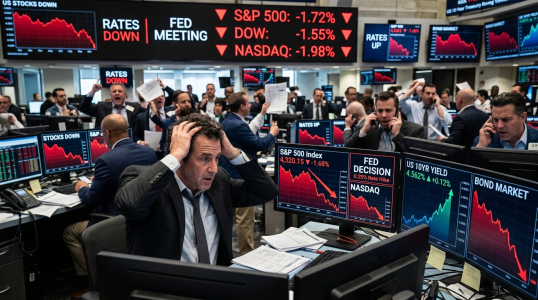
People who invested their emergency reserves in 2022 learned this when the market dropped 20 percent as layoffs began to roll in. Suddenly, their safety net was worth less precisely when they needed it most. The real wealth-building moves happen with the money above and beyond your safety buffer.
Special Considerations for Self-Employed and Freelance Workers
If you work for yourself — and I have for most of my career — the calculus shifts further. You do not get unemployment insurance. You do not get severance. When the revenue stops, it just stops.
I keep a full twelve months of expenses in reserve, plus a separate business operating fund that covers two months of overhead. That might sound extreme, but I have been through stretches where client payments arrived 90 days late and new contracts dried up at the same time. Having that cushion meant I could keep the lights on and negotiate from a position of strength instead of desperation.
Freelancers should also look into retirement planning strategies tailored to independent workers, as standard advice does not always apply when income fluctuates.
Where to Find the Extra Money
Building a bigger fund means either earning more or spending less, ideally both. On the spending side, audit your subscriptions — the average American household carries about $220 a month in recurring subscriptions, and most people use less than half of them.
On the earning side, consider picking up a side project that plays to your existing skills. Consulting, freelance writing, tutoring, or selling a digital product can add $500 to $2,000 a month without taking over your life. Funnel every dollar of that extra income straight into the fund until you hit your target.
Another approach I like: whenever you get a windfall — a tax refund, a bonus, a gift — commit at least half of it to the emergency fund. It accelerates the timeline without changing your daily habits.
The Peace of Mind Dividend
I cannot put a dollar value on the feeling of knowing I could lose my biggest client tomorrow and still pay every bill for a year. That kind of security changes how you make decisions. You negotiate harder. You say no to bad deals. You sleep better.
If you take one thing from this piece, let it be this: revisit your emergency fund number today. Pull up your bank statements, run the math with current costs, and set a target that actually reflects the world we live in right now. Then automate a plan to get there.
Image Credit: Tima Miroshnichenko; Pexels