As lawmakers refresh crypto rules and banks test new rails, one old idea is back in focus: people can send digital value to each other without a middleman. That core pitch, at the heart of Bitcoin since 2009, is shaping policy debates, corporate strategies, and household debates from Washington to Lagos.
The technology behind it is simple to state and hard to ignore. In a recent discussion, a speaker summed up the appeal:
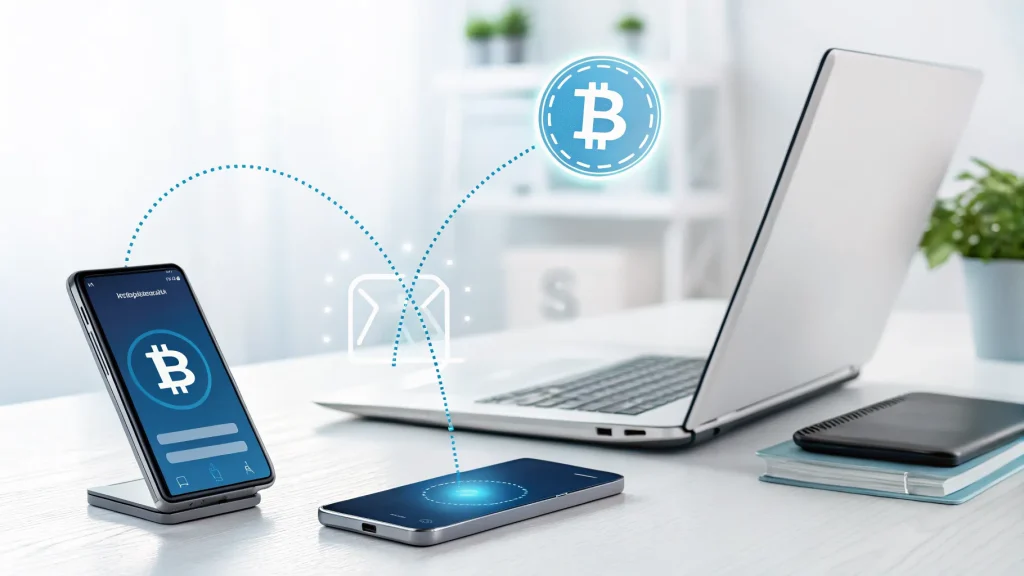
“Bitcoin runs on a P2P network instead of being controlled by the government, a bank, etc. It lets you send value directly to someone else without a middleman.”
Supporters see a tool for cheaper, faster payments and protection from censorship. Skeptics point to volatility, scams, and energy use. Both sides agree on one fact: Bitcoin changes who sits in the middle.
Table of Contents
ToggleHow the Network Works
Bitcoin operates over a peer-to-peer network of nodes that share and verify transactions. There is no central switchboard. Rules are enforced by software clients that thousands of participants run worldwide.
New transactions are grouped into blocks and added to a public ledger called a blockchain. Miners compete to add each block by solving a proof-of-work puzzle. This process makes rewriting history costly and detection easy.
The supply is fixed at 21 million coins, released on a predictable schedule. That design aims to limit inflation and keep issuance transparent.
What Changes Without a Middleman
Sending funds directly can cut reliance on banks or payment processors. Fees and wait times can drop, especially across borders or on weekends. There is no account to freeze, and there is no chargeback.
But there are trade-offs. Keys control coins. Lose a private key, and funds are gone. Prices move sharply, adding risk to day-to-day spending. Fraudsters exploit that finality with phishing and fake investment pitches.
- Pros: open access, censorship resistance, settlement without banking hours.
- Cons: irreversible mistakes, price swings, and user security burdens.
Use Cases and Limits
In high-inflation economies, some holders treat Bitcoin as a store of value. Migrant workers test it for remittances when traditional fees bite. Merchants accept it for global customers through crypto payment platforms, then convert it to local currency.
Scaling has been a hurdle. On-chain capacity is limited. Tools like the Lightning Network aim to enable small, fast payments by settling many transactions off-chain, then anchoring results on the base layer.
Even so, everyday use varies by region. Where payment apps are cheap and reliable, Bitcoin’s edge is thinner. Where access is restricted, the open network matters more.
Regulation and Industry Response
Policymakers try to fit a borderless system into national rules. Many countries require exchanges to run identity checks and report suspicious activity. Tax authorities treat coin movements as potential taxable events.
Banks and card networks are split. Some see competition. Others see a new settlement rail to integrate. Fintech firms now offer Bitcoin wallets next to savings and stock accounts, betting that customers want both.
Central banks are testing their own digital currencies. These would be state-issued and permissioned, unlike Bitcoin’s open model. The projects show that the debate is not “crypto or cash,” but which mix of rails will carry value in the future.
Security, Energy, and the Road Ahead
Proof-of-work draws fire for energy use. Defenders say miners seek cheap or stranded power and can help stabilize grids by shutting down during peak demand. The truth depends on local markets and oversight.
Security is strong at the protocol level, but weak links remain at the edges. Hacks hit exchanges and wallets with poor safeguards. Education, hardware keys, and better defaults are closing those gaps.
What to watch next:
- Rules on stablecoins that bridge crypto and traditional finance.
- Merchant tools that hide the technical steps from shoppers.
- Energy policy that rewards cleaner mining without picking winners.
Bitcoin’s pitch has not changed since launch: send value to anyone, anywhere, without asking permission. That idea is now colliding with real-world needs for safety, speed, and compliance. If builders tame the risks without losing the open design, direct payments could move from crypto niche to everyday habit. If not, it may remain a hedge and a protest tool. Either way, the middleman has company.