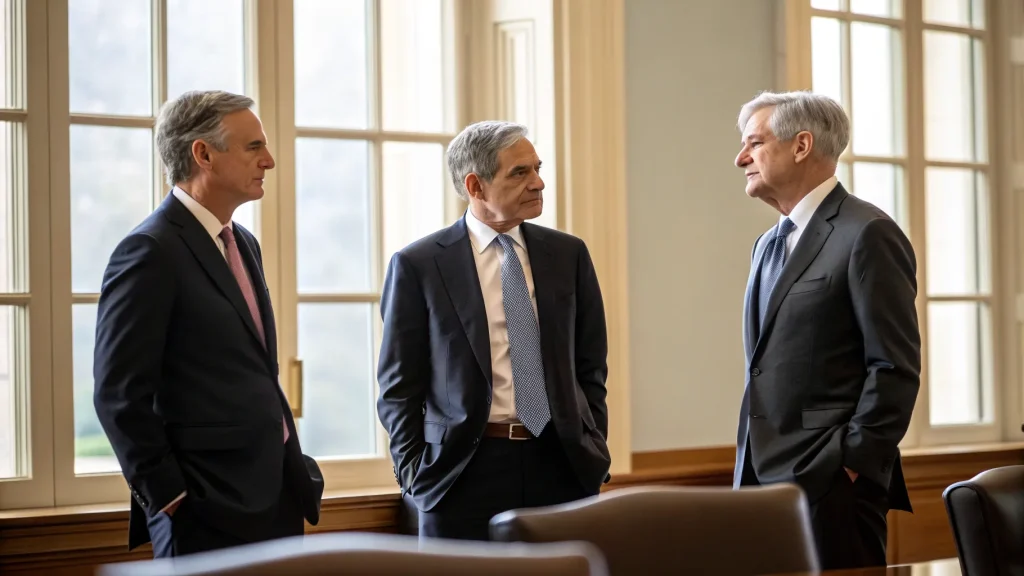
Three Federal Reserve officials sent mixed signals on interest rates Friday, signaling a live debate over how to steer the economy in the months ahead. Their differing views, shared at public appearances, reflect an institution weighing inflation progress against growth risks as the year closes.
“Three members of the Federal Reserve’s policy committee discussed interest rates on Friday, and fittingly, given the divisions on the committee, had three different views on where it should go.”
The comments land as the central bank faces a delicate choice: cut to support growth, hold to gather more evidence, or lift again if price pressures persist. Markets crave clarity. Instead, they got a reminder that policy is set by a committee with distinct voices.
Table of Contents
ToggleWhy The Split Matters
Disagreement at the Fed is not rare. It can be healthy, signaling debate rather than groupthink. But when officials send divergent messages, borrowing costs, stock prices, and currency markets can swing. Mortgage rates, credit card APRs, and business loans tie back to expectations for the federal funds rate.
Traders try to handicap each meeting. Mixed guidance raises uncertainty. That can tighten financial conditions on its own, as banks and investors demand a cushion for the unknown.
- One camp worries inflation could flare again.
- Another believes price pressures are easing enough to stand pat.
- A third argues that weak growth or rising unemployment could justify cuts.
Context: A Long History Of Debate
The Fed targets 2% inflation over time. After a spike in 2021–2022, officials raised rates at the fastest clip in decades. Disagreement grew as inflation cooled and the jobs market stayed resilient. Minutes from recent meetings have shown a mix of hawkish and dovish leanings.
Dissenting votes have appeared in many cycles. Regional bank presidents rotate as voters, and governors bring national views. That structure invites debate. It also means the message can vary across speeches and interviews, especially late in a cycle.
Labor Department data show inflation has pulled back from its 2022 peak, though services prices and housing have remained sticky. Growth has slowed from last year’s pace, and wage gains have cooled. Those mixed signals feed today’s split.
What It Means For Households And Businesses
For households, the path of rates affects monthly budgets. A steady stance keeps short-term borrowing expensive but predictable. A hike would push costs higher, while a cut could bring relief. Business investment decisions also hinge on clarity about capital costs.
Financial markets amplify the message. If investors assign higher odds to hikes, yields tend to rise, pressuring stocks and real estate. If they tilt to cuts, risk assets can rally, and the dollar can weaken. Friday’s conflicting views keep both scenarios on the table.
Reading The Tea Leaves
Without a clear chorus, the data will decide. Policymakers have pointed to three gauges again and again: inflation trends, labor market cooling, and credit conditions. If inflation stays on a slower track and hiring softens, holding—or even cutting—gains support. If price measures stall or reaccelerate, hawks will argue for fresh action.
Recent Fed communications have emphasized meeting-by-meeting choices. That makes the next few reports crucial. The committee will digest consumer inflation, producer prices, retail sales, and jobless claims before its next decision.
What To Watch Next
Investors will track how often officials repeat Friday’s mixed tone. A shift toward a common line would signal growing consensus. Absent that, markets will keep pricing a wide range of outcomes across the next two to three meetings.
Analysts will also watch financial conditions. If bond yields rise and credit tightens because of uncertainty, the Fed may not need to move as much. Conversely, easier conditions could nudge officials to stay firm longer.
For now, the takeaway is simple: the debate is real, and policy is not on autopilot. Three voices, three views, one decision ahead.
The latest remarks highlight an open question rather than a settled plan. Expect the data to set the pace, and the committee to argue its way to a verdict. The next test will be whether officials can narrow their differences—or whether the economy forces the issue first.